Moving with a walking pad: weight, stairs and walk-ups
If you rent, you will move this machine at least twice: the day it arrives and the day you leave. The published weight decides how bad both of those are.
By Stephen V. · Last updated
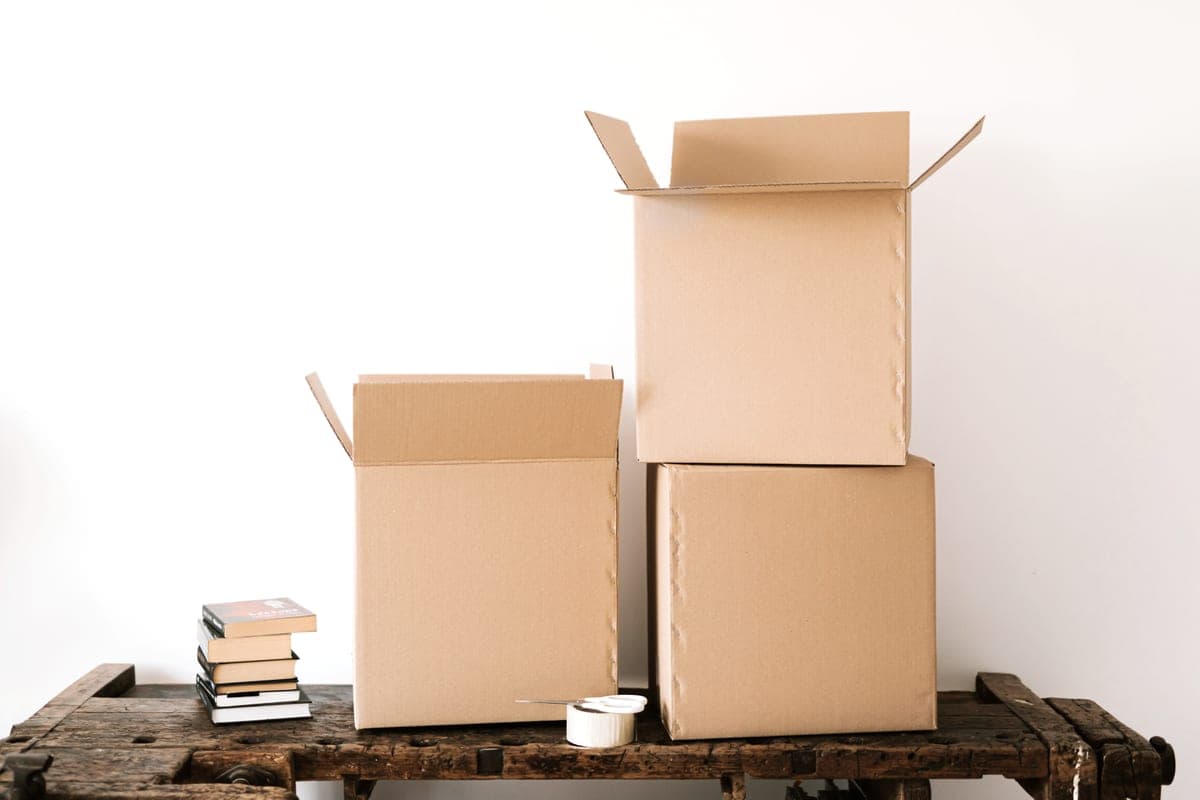
Published unit weights run 40 to 69.5 lb. Our working thresholds: under 50 lb is a one-person carry up a flight or two, 50 to 60 lb is manageable but not pleasant, and over 60 lb on a third-floor walk-up is a two-person job with an awkward shape and no handholds.
Every published weight, ranked
| Model | Weight | Folded length | Stairs |
|---|---|---|---|
| Lifepro PacerMini | 40 lb | Not published | One person |
| UREVO Strol 2E | 47.2 lb | 51.2 in | One person |
| WalkingPad Z1 | 51 lb | 31.8 in | One person, awkwardly |
| WalkingPad C2 | 55 lb | 32.5 in | One person, awkwardly |
| WalkingPad P1 | 62 lb | 32.5 in | Two people |
| WalkingPad A1 Pro | 63 lb | 32.5 in | Two people |
| Sunny Health & Fitness TreadPad Sleek Stride (SF-T722069) | 69.5 lb | Not published | Two people |
DeerRun Under-Desk Walking Pad publishes no unit weight at all, so it is not in the table above. On a machine you have to lift, that is a meaningful omission and not one we are going to fill in with a guess.
The 50 and 60 lb thresholds are ours, not a manufacturer specification — a working rule about what a single person can reasonably manage on stairs with a bulky object. Your own limits are the ones that count.
Why the shape matters as much as the number
A 60 lb walking pad is harder to carry than a 60 lb box, and it is worth understanding why before you decide 60 lb sounds fine.
There are no handholds. These machines are designed to look clean and sit flat. What that means in practice is a smooth slab with nothing to grip, so you are carrying it pinched between your forearms or hooked under the edges.
The load is long and the weight is not centered. The motor sits at one end. A 32 to 51 inch object with the mass biased to one side wants to rotate as you lift it, and on stairs that means fighting it the whole way.
It is the wrong width for a stairwell. At 20.4 to 24.9 inches wide, a folded pad carried flat across your body does not turn a tight landing easily. Carried edge-on it is more manageable but harder to grip.
This is where the folded length in the table earns its place: a pad that folds in half to around 32 inches is genuinely easier to handle on stairs than a 51 inch slab, even when the 51 inch one is lighter. The UREVO Strol 2E is the interesting case — at 47.2 lb it is one of the lightest, but at 51.2 inches folded it is also the longest thing you would be carrying. Its safety handle helps, and it is the only machine here that has one.
The three days weight actually bites
1. Delivery day
The shipping box is bigger and heavier than the machine, and couriers in most buildings deliver to the lobby rather than the door. If you are in a third-floor walk-up and you bought a 69.5 lb machine, plan for a second person on that specific day. Unboxing in the lobby and carrying the bare machine up is usually easier than wrestling the box.
2. Every day, in and out of storage
This is the one people do not think about and the one that decides whether they keep using it. Sliding a 40 lb slab out from under a sofa is a nudge. Sliding a 69.5 lb one is a decision you make each morning, and eventually stop making.
Most machines have small transport wheels at one end, so on a flat hard floor you tilt and roll rather than lift. That works well and is how they are meant to be moved day to day. It works much less well on carpet, and not at all if the pad lives somewhere you have to lift it into.
3. The day you move out
Down the stairs, into a vehicle, out at the other end. If you rent, you will do this on a schedule you did not choose, probably in one day, alongside everything else you own. If the machine is going to make that trip often rather than twice, we rank the same pads on carry weight and folded length instead — including what happens when you try to check one as baggage.
Keep the original box if you have anywhere to put it. A flat 32 x 22 x 6 inch carton stores behind a wardrobe and makes moving day markedly easier — it protects the belt surface and gives you something square to grip.
Practical moving notes
- Fold it first, always. Carrying an unfolded pad is both heavier to control and puts stress on the fold hinge, which is the part most likely to be damaged in a move.
- Unplug and coil the cable before you lift. A trailing power cable on stairs is the actual injury risk here, more than the weight is.
- Carry it edge-on rather than flat. Narrower profile through doorways and around landings, and your grip is on the frame edge rather than under a smooth face.
- Do not carry it by the folded handle on machines that have one, unless the manual says the handle is rated to carry the unit. Handles are frequently for stability while walking, not for lifting the whole machine.
- Protect the belt. Do not stand anything on the belt surface in a moving van, and do not lay the machine face-down on grit.
These come from the general handling advice in the manuals plus the obvious mechanics of a long, heavy object. They are not a manufacturer procedure and are not stated as one.
The one thing worth buying for this
Not straps and not a dolly — at 40 to 69.5 lb folded these are a carry, not a haul, and the daily version of the job is moving the machine a few feet across a floor rather than down three flights. That is the part where something cheap actually helps.
How this page is funded: the buy links here are Amazon affiliate links, and we earn a commission if you buy through one — at no extra cost to you. It does not change what we rank first, because the commission rate is the same across every machine on this page. Full disclosure.
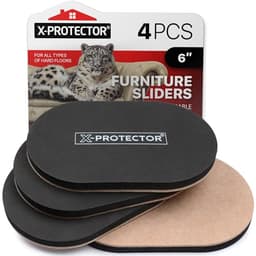
X-Protector — Felt Furniture Sliders for hardwood floors, 4 pack, 6 x 3.5 in
A folded pad weighs 40 to 69.5 lb depending on the model, and the daily job is not carrying it — it is moving it four feet to where it lives without dragging metal across a floor you are going to be inspected on. At 6 x 3.5 inches these are large enough to sit under the ends of a folded deck rather than the corner of a chair leg.
The catch: Felt is for hard floors. On carpet it does nothing, and on a floor with grit already on it a slider drags the grit rather than the machine. Sweep first. They also do not reduce noise while you are walking — nothing under a stationary object helps while the machine is in use.
Amazon retail listing, read 2026-08-17. We have not used this item; it is here because a page on this site already told you to do the job it does.
Questions people actually ask
How much does a walking pad weigh?
Among the models we track, published unit weights run from 40 lb to 69.5 lb. That is the number that decides whether you can slide it out from under the sofa one-handed every day, and whether the day it arrives involves a second person. Anything over about 55 lb is a real lift, not a nudge.
Can one person carry a walking pad up stairs?
Under about 50 lb, usually yes for a flight or two — awkwardly, because these have no proper handholds. Over about 60 lb on a third-floor walk-up is genuinely a two-person job. The shape works against you as much as the weight: a 32 to 56 inch slab with nothing to grip is harder than a compact 60 lb box.
What is the lightest walking pad?
Of the machines we track, the Lifepro PacerMini at 40 lb, then the UREVO Strol 2E at 47.2 lb. The Strol is the lighter of the two full-size machines and the only one under 50 lb with a safety handle, which also gives you something to hold when carrying it.
Do walking pads have wheels?
Most have small transport wheels at one end so you can tilt and roll them across a flat floor, which is how they are designed to be moved day to day. Wheels do nothing on stairs, and stairs are where the published weight figure actually matters.
Read next
- How much does a walking pad cost? — including the costs that are not the purchase price.
- Will it fit? Folded sizes vs real apartment storage — the other half of the renter question — where it lives between moves.
- Best walking pads for apartments — where carry weight is one of the three ranking criteria.
- Walking pad dimensions: every model, folded and open — the folded lengths that make a pad easy or awkward on stairs.
- UREVO Strol 2E review — the lightest full-size machine we track, and the only one with a handle.
- Setting one up without drilling anything — what to do at the other end, once it is up the stairs.
- Best walking pads for heavier walkers — the other weight number — yours, not the machine's.
- Walking pad belt slipping or off-center — why a machine often needs re-tracking after it has been carried.
Sources
- Lifepro PacerMini unit weight — Rehabmart retail listing spec table (read 2026-07-24)
- UREVO Strol 2E unit weight — urevo.com product spec table (read 2026-07-24)
- WalkingPad Z1 unit weight — walkingpad.com product spec table (read 2026-07-24)
- WalkingPad C2 unit weight — walkingpad.com product spec table (read 2026-07-24)
- WalkingPad P1 unit weight — walkingpad.com product spec table (read 2026-07-24)
- WalkingPad A1 Pro unit weight — walkingpad.com product spec table (read 2026-07-24)
- Sunny Health & Fitness TreadPad Sleek Stride (SF-T722069) unit weight — sunnyhealthfitness.com product spec table (read 2026-07-24)