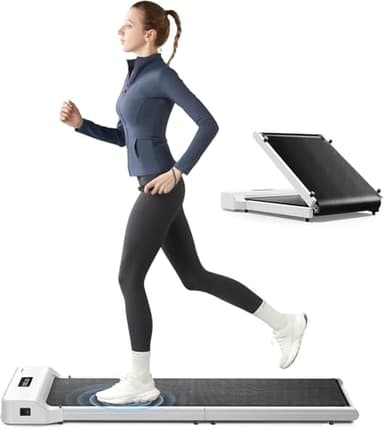
Best for Apartments
Best Walking Pads for Apartments
Ranked on the three things an apartment decides: where it lives when folded, what the floor below hears, and whether you can carry it up the stairs.
Top pick: WalkingPad Z1
Walking pads ranked for apartments and small rooms — on folded size, deck length, unit weight and whatever noise figure the maker will actually publish.
By Stephen V. · Last updated
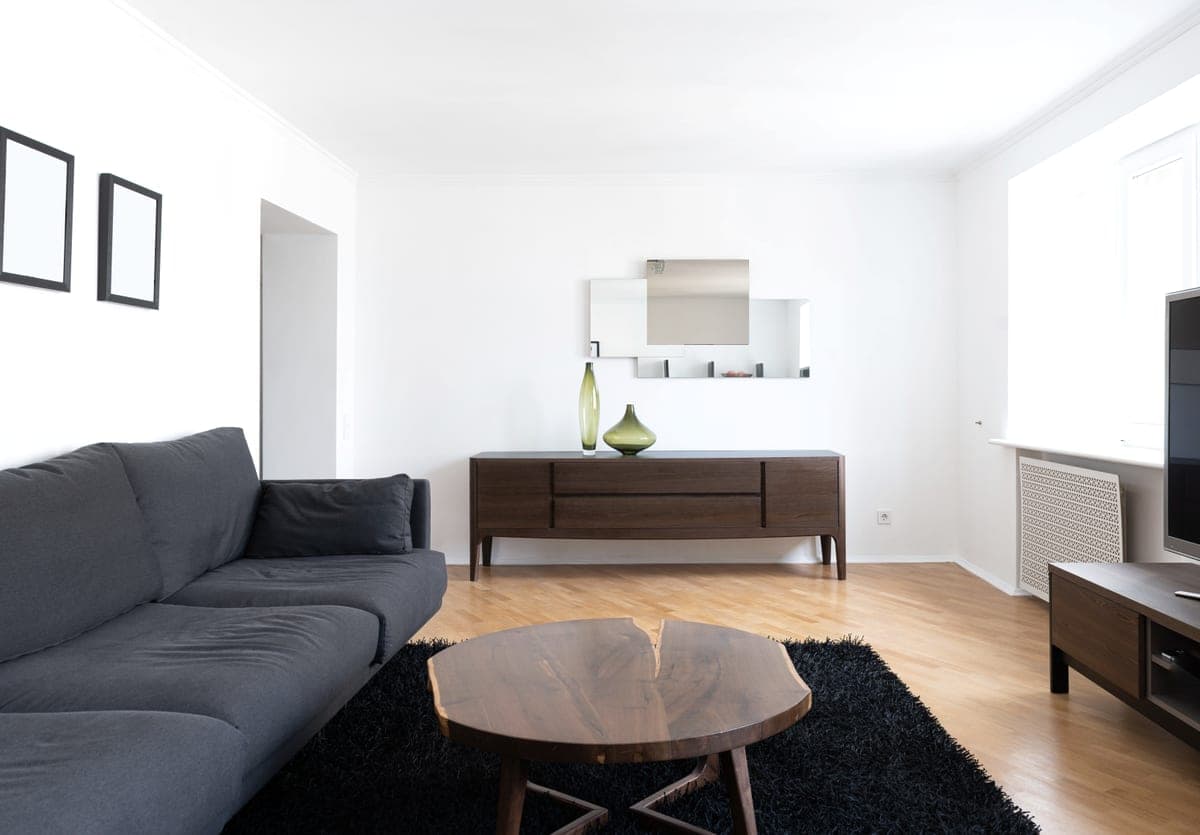
A walking pad is a treadmill with the frame taken off. That is the whole product: a motorized belt, four to six inches tall, that slides under a desk and, on most models, folds in half afterward. It exists because a real treadmill needs a room, and most people do not have a spare room.
Which means the specifications that matter here are not the ones the marketing leads with. Motor horsepower is close to irrelevant at walking speed. App integration is a nice-to-have. What decides whether you still own the thing in six months is where it goes when you are done with it, whether the belt is long enough for your stride, and whether the person underneath you can hear it.
We track 8 of them. Every published dimension, weight, capacity and noise figure is compiled with a label saying where it came from, and where a manufacturer publishes nothing, the table says so rather than guessing.
Best for Apartments
Ranked on the three things an apartment decides: where it lives when folded, what the floor below hears, and whether you can carry it up the stairs.
Top pick: WalkingPad Z1
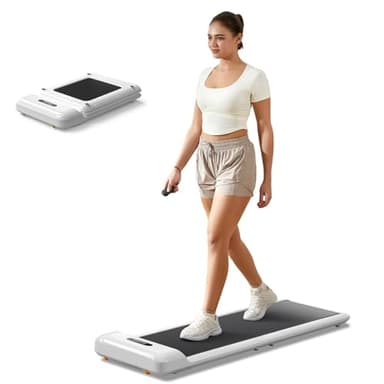
Best for Small Spaces
Every folded dimension against every realistic storage gap, so you know before you buy whether it goes under the sofa or lives in the hall.
Top pick: WalkingPad C2
Price as of October 22, 2026. #ad How we’re funded
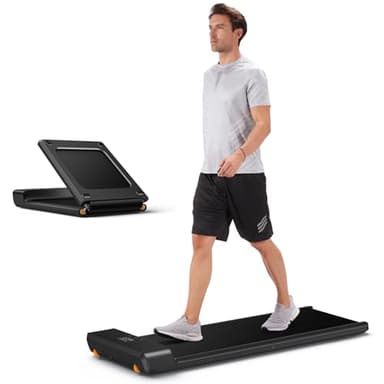
Quietest on Paper
Ranked by what each maker actually publishes about noise. Two of eight publish a figure at all. We name the other six.
Top pick: WalkingPad A1 Pro
Price as of October 22, 2026. #ad How we’re funded
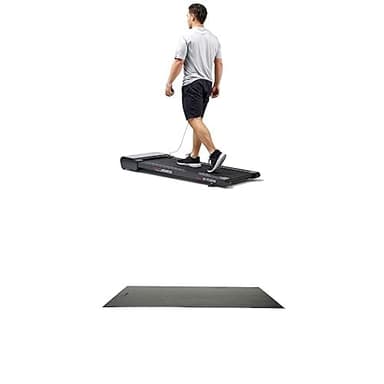
Best With Incline
Incline raises the deck, and a raised deck eats your desk clearance. The picks, and the arithmetic you need before you order one.
Top pick: Sunny Health & Fitness TreadPad Sleek Stride (SF-T722069)
Price as of October 22, 2026. #ad How we’re funded
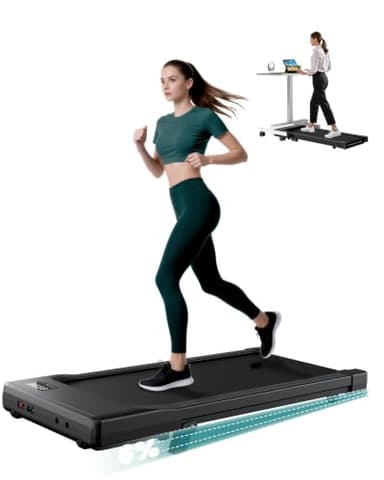
Best Budget Pick
What you actually give up at the bottom of the market — and it is usually the published specifications, not the motor.
Top pick: DeerRun Under-Desk Walking Pad
Lowest Deck Height
Deck height is the pass-or-fail number: every inch the belt sits off the floor is an inch your desk has to give back. The arithmetic, then the picks.
Top pick: WalkingPad Z1
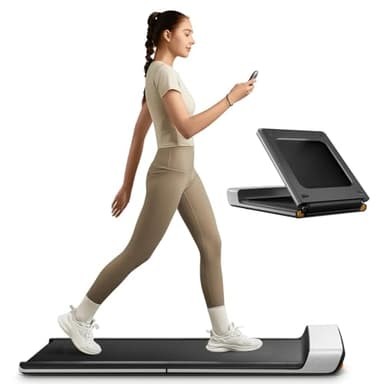
Widest Belt
Belt length against a real stride, belt width against a real gait. Two of the eight pads we track are genuinely too short for a six-foot walker.
Top pick: WalkingPad P1
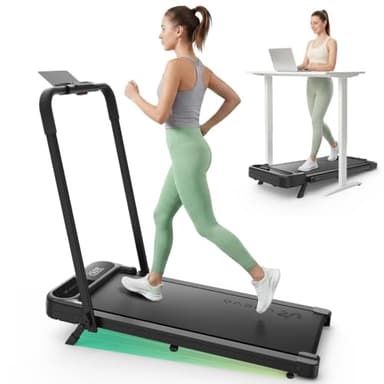
Best for Heavier Walkers
Published capacities run 220 to 300 lb, and the highest figure comes from the maker that publishes nothing else. Which of these numbers to trust.
Top pick: UREVO Strol 2E
Price as of October 22, 2026. #ad How we’re funded
Best on Carpet
No maker publishes a word about carpet. So we ranked on the three specs that decide it anyway — footprint, unit weight and deck-to-floor height.
Top pick: Sunny Health & Fitness TreadPad Sleek Stride (SF-T722069)
Price as of October 22, 2026. #ad How we’re funded
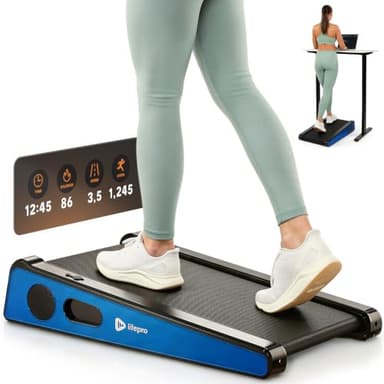
Best for Dorm Rooms
A dorm adds two constraints an apartment does not: a roommate in the same room, and a bed frame as the only storage you control.
Top pick: Lifepro PacerMini
Best for a Home Office
A room you also take calls in changes the ranking: airborne motor noise beats footfall, and the machine has to disappear before the next video call.
Top pick: WalkingPad A1 Pro
Price as of October 22, 2026. #ad How we’re funded
Best for Seniors
Ranked on the three things that decide it after sixty: how high you have to step up, how slowly it will go, and whether there is anything at all to hold on to.
Top pick: UREVO Strol 2E
Price as of October 22, 2026. #ad How we’re funded
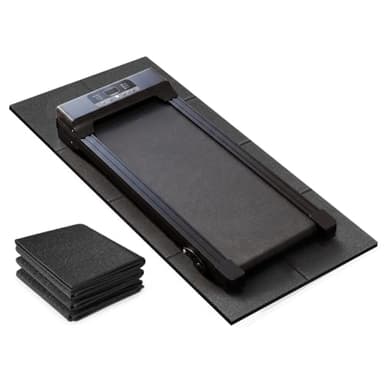
Best Mat
Four mats, four published thicknesses, and not one maker that will tell you what the thing is made of or what it weighs. What a mat actually does, and which shape fits a small room.
Top pick: Stepwaver Walking Pad Treadmill Mat
Price as of October 22, 2026. #ad How we’re funded
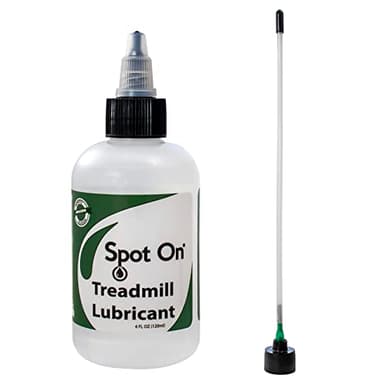
Only Required Accessory
Seven items ordered by who says you need them. Exactly one is named in a maker's own maintenance document, two you should skip if you already own them, and the most-requested one does not exist as a product.
Top pick: Spot On Premium Treadmill Belt Lubricant, 100% pure silicone
Price as of October 22, 2026. #ad How we’re funded
Best-Documented Brand
Five brands, one test: how much of the specification each will put in writing. Two publish a full table, two publish a decibel figure, one publishes nothing at all.
Top pick: WalkingPad Z1
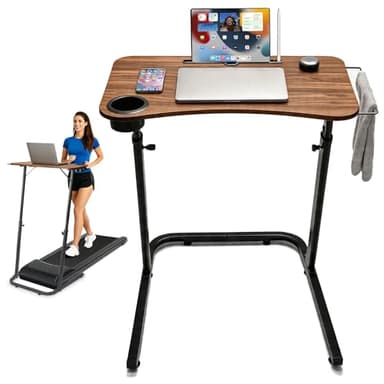
Highest Published Desk
The pad puts 4 to 7 inches under your feet and the desk has to give it back. Not one desk sold for a walking pad publishes a maximum height that clears a 5 ft 10 in walker.
Top pick: Stepwaver Treadmill Desk, small standing desk for walking pad
The Only Pad With a Handle
One of the eight pads we track has anything to hold, and the handle costs it the longest folded length on this site. What a handle buys, what it costs, and the two machines to look at instead.
Top pick: UREVO Strol 2E
Price as of October 22, 2026. #ad How we’re funded
Best for TV Walking
Take the desk away and the ranking inverts: deck height stops deciding anything, the published top speed finally has somewhere to go, and the noise figure now competes with the television.
Top pick: UREVO Strol 2E
Price as of October 22, 2026. #ad How we’re funded
Best for Gaming Desks
A tower already on the floor, an open microphone in the room and sessions longer than any work block. Ranked on width, published minimum speed and the only two decibel figures in the category.
Top pick: WalkingPad A1 Pro
Price as of October 22, 2026. #ad How we’re funded
Best for All-Day Use
The one maker that publishes a continuous-use limit states an hour at a time, then half an hour off. So the real question is which pad gives you the longest total day in blocks.
Top pick: WalkingPad Z1
Lightest to Carry
Every pad here is sold as portable. Run the published weights and folded sizes against a real airline's baggage bands and not one of them can be checked as a standard bag.
Top pick: Lifepro PacerMini
Best for Short Walkers
Under about 5 ft 4 in the belt length our tall-walker page is built on stops binding, and three figures nobody ranks on take over - step-up height, belt width and cadence.
Top pick: Lifepro PacerMini
Black Friday & Cyber Monday 2026
What has historically discounted in this category and what has not, buy-now-or-wait by product class, and the current picks with live prices. Deals get posted here when they exist.
Top pick: UREVO Strol 2E
Price as of October 22, 2026. #ad How we’re funded
The published folded heights across the models we track run from 4.6 to 7 inches. A typical sofa clears about 6. That two-and-a-half-inch spread is the difference between a machine that disappears and one that becomes furniture, and it is almost never the number a review leads with.
Folded length is the companion number, and it splits the category cleanly. Pads that fold in half at the deck come down to roughly 32 inches, which stands upright in a closet. Pads that only fold the handle flat stay 48 to 58 inches long — they slide under a bed and go nowhere else. Our fit matrix runs every one of them against four real storage gaps.
Published belt lengths here run from 27.6 to 47.6 inches. That is a 20-inch spread within a single product category, and it is the biggest hidden difference between two machines that look identical in photographs. Walking stride is roughly 0.43 times your height, so a 6-foot walker needs somewhere near 31 inches of stride plus margin for drift — which a 27.6-inch belt simply does not have.
Belt width matters less than people expect at 15 to 16.5 inches, but it is the difference between drifting and correcting versus drifting and finding the edge. Both numbers, for every model.
This is the specification the category is worst at. Of the 8 pads we track, 2 publish a decibel figure at all. Every “whisper quiet” claim you read about the others traces back to marketing copy or a reviewer’s estimate.
More usefully: on a hard floor in an apartment, most of what your downstairs neighbor hears is not the motor at all. It is footfall energy going into the structure. A motor decibel figure, even a truthful one, does not describe that — which is why the mat under the deck does more for the relationship with your neighbor than any motor specification. The full noise write-up.
Published weights run 40 to 69.5 lb. That number bites on two days: the day it arrives and has to come up your stairs, and every day you slide it out from wherever it lives. Under about 50 lb is a one-person carry; over about 60 lb, on a third-floor walk-up, is genuinely a two-person job with no good handholds and an awkward center of mass.
Incline raises the deck, and a raised deck eats into your standing-desk clearance. On a desk that maxes out at 48 inches, a deck sitting 5.7 inches off the floor at full incline removes nearly six inches of headroom from a person already standing at their full height. That is arithmetic worth doing before you buy an incline model, not after — we do it here.
How any of these feel underfoot. Whether the belt holds up over two years. Whether the deck flexes. Those need use, we have not used them, and inventing an opinion about them would undo the only thing this site has going for it. The full method, including what we refuse to claim.