Will It Fit? Folded Sizes vs Real Apartment Storage
Every folded footprint checked against a sofa gap, a bed frame, a closet and the back of a door — with the margin in inches.
The three questions a renter has that a homeowner does not: will it fit, can I move it, and can I set it up without touching the property.
By Stephen V. · Last updated
Every walking pad review is written for someone with a spare room. The equipment advice assumes a garage, a basement, or at minimum a corner nobody else needs. If you rent a one-bedroom, none of that applies to you and most of the specifications being discussed are the wrong ones.
A renter has three questions a homeowner does not. Where does this live when I am not using it, given that every square foot is doing something else already? What happens on moving day, given that I will do this again in a year? And can I set it up without altering a property that is not mine?
None of those are answered by motor horsepower. All three are answered by published numbers — folded footprint, unit weight, and what actually sits between the deck and the floor. This is the hub for those answers.
Every folded footprint checked against a sofa gap, a bed frame, a closet and the back of a door — with the margin in inches.

Published unit weights run 40 to 69.5 lb. Which of those is a one-person carry down three flights, and which is the day you regret the purchase.
Nothing here touches the property: no wall anchors, no floor fixings, no rewiring. What a renter can actually change is the surface underneath and the hours.
Most Exercise Per Square Foot
Four categories judged in the currency a renter actually pays: square feet occupied while it runs, and square feet occupied the other twenty-three hours.
Top pick: WalkingPad Z1
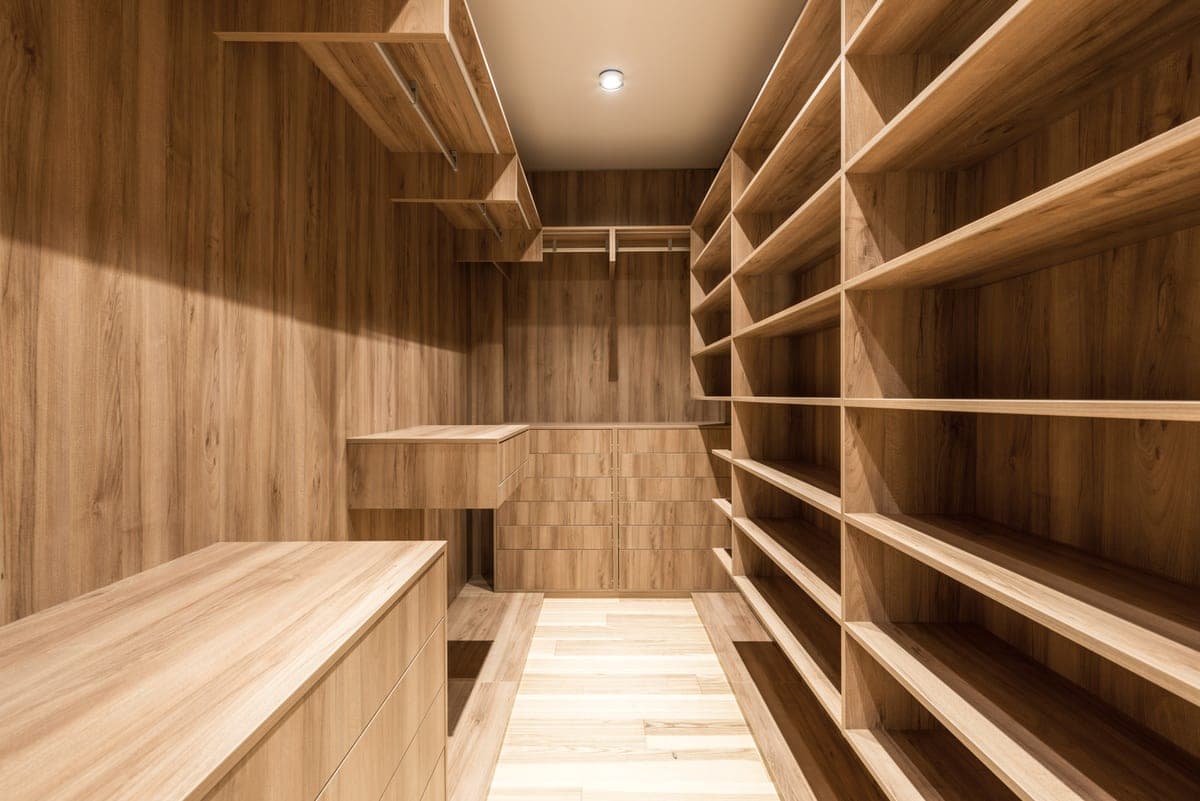
In a small rental the machine has to disappear, and “it folds” is not the same as “it disappears”. Folded, the pads we track are 4.6 to 5.4 inches tall and 31.8 to 51.2 inches long, which means height is rarely what stops one — every pad that publishes a folded height clears a typical sofa gap. Length is what decides where it goes.
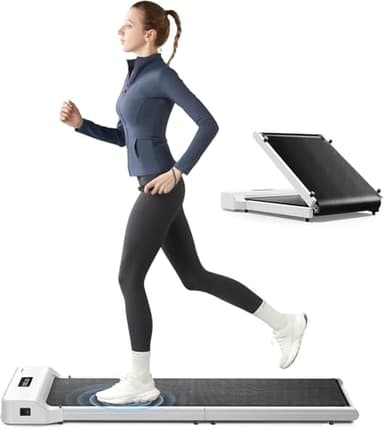
The split that matters is how a pad folds. Fold-in-half models come down to around 32 inches long and stand upright in a closet. Handle-fold models stay 48 to 58 inches and go under a bed or nowhere. Every folded footprint against four real storage gaps, with the clearance margin in inches.
Published unit weights run from 40 lb to 69.5 lb. The lightest machine we track is the Lifepro PacerMini at 40 lb. The heaviest is nearly 30 lb more, which on a third-floor walk-up with no elevator is the difference between an inconvenience and a two-person job.
And the weight bites twice. Once on moving day, and once every single day you slide it out from under the sofa. A machine you dread moving is a machine you stop moving, and then stop using. Weight, stairs and walk-ups.
This one turns out to be easy, and it is worth saying so plainly: a walking pad requires no fixings, no anchors, no rewiring and no permanent change to anything. It plugs into a standard outlet and sits on the floor. There is nothing here that a landlord could object to on structural grounds.
What a renter can and should change is the surface underneath. A dense mat between the deck and the floor is the single most effective thing available to you, because it addresses the one issue that actually generates complaints. Setting one up without drilling anything.
The complaint risk in an apartment is almost never about volume in your own room. It is about what goes into the floor slab and comes out of somebody else’s ceiling. That is structure-borne, it behaves differently from airborne noise, and the decibel figure on a spec sheet — when one exists at all — does not describe it.
Which is why the practical renter answer is: pick on folded size and weight, then spend a little on a proper mat. Why the mat matters more than the motor.
Read the quiet-hours clause and any clause about heavy or fixed equipment before you order, not after. Most leases have nothing to say about a 50 lb appliance that plugs into a wall, but some buildings — particularly older ones with wood-frame floors — have specific rules, and finding out afterward is a bad way to find out. This is general information, not legal advice: your lease governs.