Setting up a walking pad without drilling anything
Good news first: there is nothing to install. Which means the whole renter question is about what you put underneath it and when you use it.
By Stephen V. · Last updated
A walking pad requires no fixings of any kind— no wall anchors, no floor mounting, no wiring, no permanent change. It plugs into a standard outlet and sits on the floor. The only two things a renter needs to get right are what goes under it and when it runs.
There is genuinely nothing to install
Worth stating plainly because renters reasonably assume exercise equipment means anchors and permission. It does not, for this category.
Every machine we track ships assembled or near-assembled. There is no wall bracket, no floor mounting, no bolt-down, no electrical work. You take it out of the box, unfold it, plug it into a standard outlet and stand on it. The whole setup is a five-minute job that leaves no trace.
Which means there is nothing here for a landlord to object to on structural grounds, and nothing to undo when you leave. Weight is not a concern either: published unit weights across the machines we track are 40 to 69.5 lb, and adding a walker puts the total in the range of two adults standing in one place. The lease and floor-loading question in full.
The mat, which is the actual purchase
If there is one thing on this page, it is this. The mat under the deck does more for a renter than the choice of machine does, and it does three jobs at once.
1. It cuts impact transmission.The noise that reaches the apartment below is footfall energy going through the deck into the floor structure — not motor noise through the air. A dense, resilient layer between the two is what attacks that. Why that distinction matters.
2. It protects the floor. A 50 lb machine on small feet, in the same spot for months, will indent soft flooring. That is a deposit question, and a mat is a much cheaper answer than a repair.
3. It stops the pad walking. Machines drift slightly on hard floors under repeated impact. A mat with grip stops that, which matters more than it sounds when the pad is under a desk with a chair and cables around it.
What to get: a dense equipment or treadmillmat. Not a yoga mat — a yoga mat compresses to nothing under a 50 lb machine plus a walker and does very little on any of the three counts. Density and thickness are what you are paying for.
We do not currently rank mats, and rather than point you at one we have not researched to the same standard as the machines, we would rather tell you what to look for and leave the choice to you.
By floor type
Hardwood and laminate
The noisiest combination for the neighbor below, because a hard floor transmits impact efficiently. Also the most vulnerable to indentation from the machine feet. Mat is not optional here.
Vinyl plank
Common in rentals, and the softest of the hard floors. It indents most readily under concentrated point loads and it can mark where a foot sits for months. Use a mat and, if the pad lives in one place, lift and reposition it occasionally.
Low-pile carpet
Workable, with two cautions that come from the manuals rather than from us. Carpet blocks the airflow the motor housing uses to shed heat, and pile lets the deck sink and flex under load. A firm, flat mat between carpet and deck addresses both by giving the underside something hard to sit against.
Thick or shag carpet
Manufacturers who address this at all advise against it, and we would not argue. The deck flexes, the machine sits unstable, and heat has nowhere to go. If that is your only floor, a rigid board under the mat is the workaround — but treat it as a compromise rather than a solution.
Power, and what not to do
A standard household outlet is all that is needed. Nothing we track requires a dedicated circuit, an adapter or any electrical work, which is another reason this is a renter-friendly appliance.
Two practical cautions, both general appliance sense:
- Do not run it on a long thin extension cord. A motor drawing through an undersized cord is the standard way people create a heat problem out of nothing.
- Do not daisy-chain power strips.Same reasoning. If the outlet is not where the pad needs to be, move the pad rather than extending the cord across the room — a cable running across the floor beside a moving belt is a trip risk anyway.
Route the cable away from the step-off zone behind the deck. That is where you will be stepping backward off a belt that may still be moving, and it is the last place a cable should be.
Where in the room to put it
Three considerations, in order of how much they matter.
Clear floor behind the deck.Plan about 12 inches for stepping off. This is our allowance rather than a manufacturer figure — none of them publish a required clearance — and it is the least that feels safe. The full space arithmetic.
Nearer a load-bearing wall than the middle of the span. Floors flex most in the middle of their span, and flex is what transmits into the structure. Placing the pad closer to a wall generally puts less into the floor system. That is a structural generality rather than something we measured, and we are labeling it as such — but it costs nothing to try.
Somewhere you will actually use it. A pad in the spare corner where you never work is a pad you stop using. The whole premise is that it happens during hours you were already at your desk, which means it needs to be at the desk.
Leaving it how you found it
There is not much to do, which is the point. But two things worth doing before the final inspection:
- Lift the mat and check underneath.Indentation from machine feet, if any, will have transferred to the mat rather than the floor — that is the mat having done its job. Give the floor a day to recover before an inspection if it has any impression at all.
- Keep the box if you can. A flat carton behind a wardrobe makes moving day easier and protects the belt surface in a van. More on getting it back down the stairs.
General information, not legal advice. Your lease governs, and reading its quiet-hours and equipment clauses before you order is five minutes well spent.
Two things that keep this off the inspection report
Neither of these touches the property, which is the whole rule on this page. One stops a 55 lb folded deck being dragged across a floor you do not own; the other covers the cable where it genuinely has to cross the floor — moving the pad closer to the outlet is still the better answer where you can.
How this page is funded: the buy links here are Amazon affiliate links, and we earn a commission if you buy through one — at no extra cost to you. It does not change what we rank first, because the commission rate is the same across every machine on this page. Full disclosure.
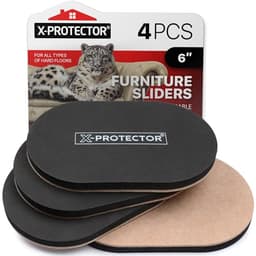
X-Protector — Felt Furniture Sliders for hardwood floors, 4 pack, 6 x 3.5 in
A folded pad weighs 40 to 69.5 lb depending on the model, and the daily job is not carrying it — it is moving it four feet to where it lives without dragging metal across a floor you are going to be inspected on. At 6 x 3.5 inches these are large enough to sit under the ends of a folded deck rather than the corner of a chair leg.
The catch: Felt is for hard floors. On carpet it does nothing, and on a floor with grit already on it a slider drags the grit rather than the machine. Sweep first. They also do not reduce noise while you are walking — nothing under a stationary object helps while the machine is in use.
Amazon retail listing, read 2026-08-17. We have not used this item; it is here because a page on this site already told you to do the job it does.
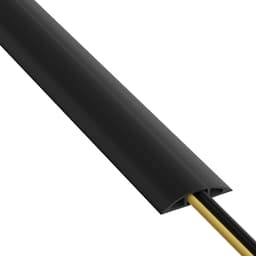
D-Line — 6 ft Floor Cord Cover, cable cavity 0.63 x 0.31 in
A walking pad needs an outlet, and in a rented room the outlet is rarely where the pad goes. That leaves a power cable crossing the floor beside a machine you step on and off several times a day. This is the fix that does not involve touching the property — no anchors, no adhesive on a wall, nothing to make good when you leave.
The catch: Check the cavity against your plug and cable before you order: it takes a cord up to 0.63 in wide and 0.31 in tall, not a molded plug head. It is also a ramp, so it is something on the floor rather than nothing on the floor — worth it beside a machine, not worth it across a doorway.
Amazon retail listing, read 2026-08-17. We have not used this item; it is here because a page on this site already told you to do the job it does.
Questions people actually ask
Do you need to install a walking pad?
No. Every machine we track ships assembled or near-assembled and requires no fixings of any kind — no wall anchors, no floor mounting, no wiring. It plugs into a standard outlet and sits on the floor, which is exactly what makes it renter-friendly.
Will a walking pad damage apartment floors?
The risk is surface wear rather than structure. A 40 to 70 lb machine concentrates its weight on small feet, which over months in the same spot can indent soft flooring — vinyl plank, laminate, softwood. A mat spreads that load, and you were going to put one down for noise anyway.
Can you use a walking pad on carpet?
Usually yes on low-pile carpet, with two cautions from the manuals: carpet blocks the airflow that cools the motor housing, and deep pile lets the deck sink and flex. A firm mat between the carpet and the deck addresses both. Manufacturers who address this at all recommend against thick or shag pile.
What kind of mat should go under a walking pad?
A dense equipment or treadmill mat rather than a thin yoga mat. A yoga mat compresses to almost nothing under a 50 lb machine plus a walker, so it does very little for either impact noise or floor protection. Density and thickness are what you are buying; brand matters much less.
Do I need a dedicated circuit for a walking pad?
No. These are small-motor appliances that run from a standard household outlet — nothing we track requires a dedicated circuit or any electrical work. The practical caution is not to run one on a long thin extension cord or a daisy-chained power strip, which is general appliance advice rather than something specific to walking pads.
Read next
- Are walking pads loud? — why the mat under it matters more than which machine you buy.
- Can you use a walking pad in an apartment? — the lease, the hours and the conversation with the neighbor below.
- Will it fit? Folded sizes vs real apartment storage — where it lives when the setup is packed away.
- Best walking pads for apartments — the ranked picks for exactly this situation.
- Moving with a walking pad — the other end of the rental cycle.
- Can you use a walking pad on carpet? — the board underneath, which changes nothing about the property.
- Best walking pads for carpet — the picks, if the rental came with pile you cannot take up.
Sources
- WalkingPad Z1 — walkingpad.com product spec table (read 2026-07-24)
- WalkingPad C2 — walkingpad.com product spec table (read 2026-07-24)
- WalkingPad P1 — walkingpad.com product spec table (read 2026-07-24)
- WalkingPad A1 Pro — walkingpad.com product spec table (read 2026-07-24)
- UREVO Strol 2E — urevo.com product spec table (read 2026-07-24)