Mini stepper calories: what the arithmetic can and cannot tell you
The work done stepping is body mass times vertical distance. The machines know neither number, and their makers publish neither - which is a more interesting answer than a calorie figure.
By Stephen V. · Last updated
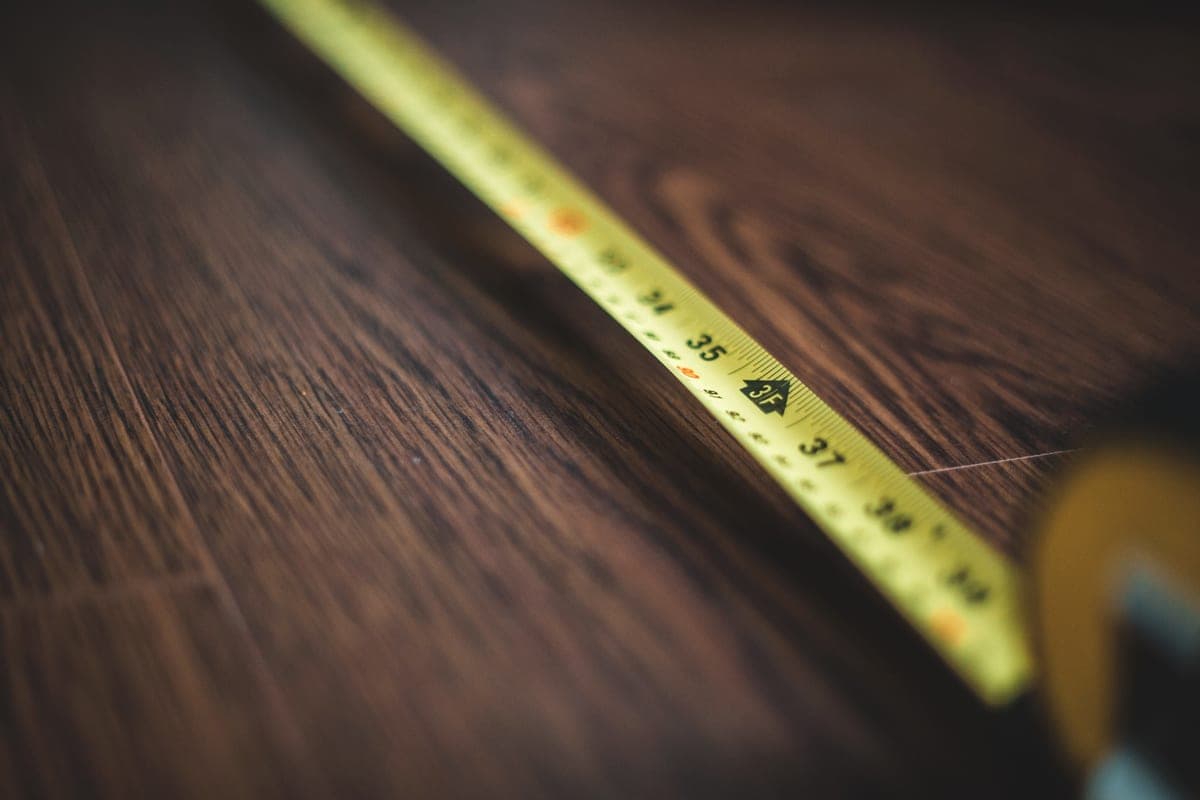
Stepping work depends on your mass and how far you lift it each step. The machine knows neither, and none of the three steppers we track publishes a step height— so the figure cannot be computed even in principle from what is published. Any number on a monitor is a model.
How this page is funded: the buy links here are Amazon affiliate links, and we earn a commission if you buy through one — at no extra cost to you. It does not change what we rank first, because the commission rate is the same across every machine on this page. Full disclosure.
The one equation this question needs
Stepping is one of the few exercises where the mechanical work has a clean form. You are lifting your body a short vertical distance, repeatedly. The work per step is your mass multiplied by the height you rise, and the total is that multiplied by the number of steps.
Metabolic energy cost is higher than the mechanical work, because muscles are not efficient and because there is a cost to lowering as well as lifting. But the mechanical work is the floor of the calculation, and without it there is nothing to build on.
So to answer “how many calories does a mini stepper burn” you need three things: your mass, the vertical travel of the pedal, and your step rate. You know the first. You can count the third yourself in sixty seconds. The second is the problem.
The number nobody publishes
We track three mini steppers. Not one of them publishes a step height, pedal travel or stride range in any unit.
- Niceday Mini Stair Stepper— publishes overall dimensions of 16 x 12 x 14 in, a 300 lb capacity and a 1.5 mm steel frame. Its stride knob is described and not quantified. No product weight either.
- Stamina SpaceMate Folding Stepper— publishes assembled size, folded size, 45 lb product weight and a 250 lb capacity, and no step height. Its own specification tab also prints two different assembled sizes, which we flag rather than hide.
- Xiser Commercial Mini Stairmaster— publishes a 400 lb capacity, an aluminum frame and three cylinder settings, and no dimensions of any kind. On the most expensive machine on this site.
That is the finding. The single specification that would let a buyer compute what the machine actually does is absent from the entire category, while calorie claims appear in the listings freely. All three ranked on what they do publish.
| Model | In use (L x W x H) | Folded (L x W x H) | Unit weight | Max user | Resistance levels | Material |
|---|---|---|---|---|---|---|
| Niceday Mini Stair Stepper | 16" L x 12" W x 14" Hmanufacturer spec | Not publishednot published | Not publishednot published | 300 lbmanufacturer spec | Not publishednot published | 1.5 mm steel framemanufacturer spec |
| Stamina SpaceMate Folding Stepper | 30.25" L x 16.25" W x 54.5" Hmanufacturer spec | 38.5" L x 16.25" W x 9.5" Hmanufacturer spec | 45 lbmanufacturer spec | 250 lbmanufacturer spec | Not publishednot published | Heavy duty steel framemanufacturer spec |
| Xiser Commercial Mini Stairmaster | Not publishednot published | Not publishednot published | Not publishednot published | 400 lbmanufacturer spec | 3manufacturer spec | Aircraft grade cast aluminum alloymanufacturer spec |
What the monitor is actually counting
Where one of these machines has a small display, it is counting steps and time. Both are real measurements: a switch or sensor registers pedal movement, and a clock runs.
Everything past that is inference. The display does not know your mass, because nothing weighs you. It does not know the resistance setting in any quantified way, because two of the three makers do not publish resistance in units at all. It has no heart-rate sensor. So a calorie readout is a fixed formula applied to a step count, and it would produce the same number for a 120 lb person and a 250 lb one.
This is exactly the argument we make about walking pad consoles, and it is worse here, because at least a walking pad knows its own belt speed and can compute a real distance. The same reasoning, applied to walking pads.
What to use instead of a calorie number
Three things that are actually measurable, in ascending order of effort:
1. Minutes. Public activity guidance is written in minutes per week of moderate-intensity activity, not in calories. Minutes are countable by a clock and comparable to a published target. What that weekly guidance says.
2. The talk test. Moderate intensity is defined in the published guidance as being able to say a few words in a row but not sing. It costs nothing, it works on any machine, and it is a far better guide to effort than a display. Where that line sits in practice.
3. A measured heart rate.If you want a number about your body rather than about the machine, it has to be measured on your body — a chest strap or a watch, not a stepper monitor.
And if you genuinely want the mechanical work, you can get the missing number yourself: measure the vertical travel of the pedal with a tape measure, count your steps per minute, and the arithmetic above is available to you. That is one measurement more than any maker in this category has been willing to publish.
What a stepper is genuinely worth
None of the above says do not buy one. It says do not buy one on a calorie claim.
What a mini stepper actually delivers is effort in a very small amount of floor. The Niceday occupies about 1.3 square feet — less than a quarter of what a walking pad needs while running — needs no outlet, and publishes a 300 lb capacity. In a studio, a dorm or a shared bedroom, that is the honest recommendation rather than a consolation prize.
What it does not do is accumulate. A walking pad runs for hours while you work; a stepper is used in deliberate blocks, because you cannot type while stepping. Duration is the lever that matters most for total activity, and the pad has it. The full comparison, on floor space and on what you give up.
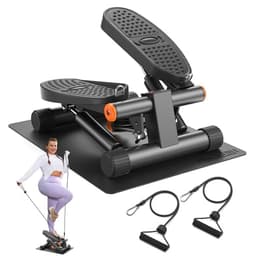
Niceday Mini Stair Stepper
Smallest footprint of anything here
A 16 x 12 inch footprint and a published 300 lb capacity — the most machine per square foot of anything on this site, and the smallest thing here you can genuinely raise your heart rate on.
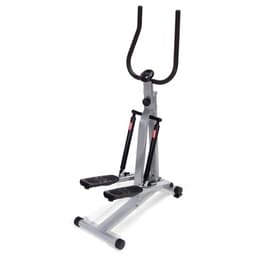
Stamina SpaceMate Folding Stepper
Handlebars, and it folds away
The only stepper here with handlebars and the only one that folds — 9.5 inches tall folded, which is the whole argument for buying a stepper you cannot leave out.
Price as of October 2, 2026. #ad How we’re funded
The Niceday is the smallest footprint on this site; the SpaceMate is the one with handlebars that folds to 9.5 inches. Neither has been used by us, and the two of them are compared in full here.
What we have not done
We have not stepped on these machines, measured a pedal travel or metered anyone’s energy expenditure. The specifications above are published figures with their sources and read dates below, and the physics is stated as an equation you can apply yourself rather than as a result we obtained.
We have published no calorie figure, and we will not until a maker publishes a step height. Producing one anyway would be exactly the invented number this page exists to warn about. Our full method. This page is general information, not medical or fitness advice.
Questions people actually ask
How many calories does a mini stepper burn?
Nobody can tell you honestly, and the reason is specific rather than evasive. The energy cost of stepping depends on your body mass and on how far you lift it with each step — and not one of the three steppers we track publishes a step height or pedal travel. Without that figure the work done per step cannot be computed at all, so any calorie number you see is a model, not a measurement.
Are the calorie counts on a mini stepper monitor accurate?
They cannot be personal, because nothing in the machine knows anything personal about you. A small monitor on a hydraulic stepper counts steps and time. It does not know your weight, your fitness or how hard the cylinders are set. That is the same structural limitation walking pad consoles have, and it produces the same kind of number: plausible, consistent and unrelated to you.
Is a mini stepper good exercise?
It raises a heart rate in about 1.3 square feet of floor with no motor and no outlet, which is a real thing to be able to do in a studio apartment. What it does not do is accumulate distance or work a wide range of motion — stepping is a fixed, repetitive movement in a small range. It is a way of getting effort into a small room, not a substitute for walking.
Mini stepper or walking pad for burning calories?
A walking pad, for most people, because duration is the lever that matters and a pad runs while you work for hours. A stepper is used in deliberate blocks, because you cannot type while stepping. The stepper wins on floor space — roughly 1.3 square feet against 8.5 — and that trade is the entire decision.
Do mini steppers have resistance settings?
Sometimes, and the publishing is poor. Of the three we track, only the Xiser publishes a count — three cylinder settings set by a knob. Niceday describes a stride knob without quantifying it and Stamina describes 'adjustable' resistance with no count. So on two of three machines you cannot compare how hard they get, before you even reach the question of calories.
How long should you use a mini stepper for?
No maker on this site publishes a recommended session length, so there is nothing to quote. Public activity guidance is written in weekly minutes of moderate-intensity activity rather than in sessions on any particular machine — the practical test is the one the guidance gives: at moderate intensity you can say a few words in a row but not sing.
Read next
- Are mini steppers worth it? — the buying decision behind the arithmetic, including who should not buy one.
- Best mini steppers for small spaces — three machines, ranked on what each maker will state in writing.
- Walking pad vs mini stepper — 8.5 square feet against 1.3, and what the cheaper machine gives up.
- Are walking pad calorie counts accurate? — the same argument, on the machines with a belt.
- Is a walking pad good cardio? — the talk test, and where desk pace lands against it.
- Best cardio equipment for a small apartment — four categories ranked in square feet rather than features.