How to choose a walking pad
Not a ranking. The order to do this in: four things to measure in your own room, five published figures to read against them, and three figures you will go looking for and not find.
By Stephen V. · Last updated
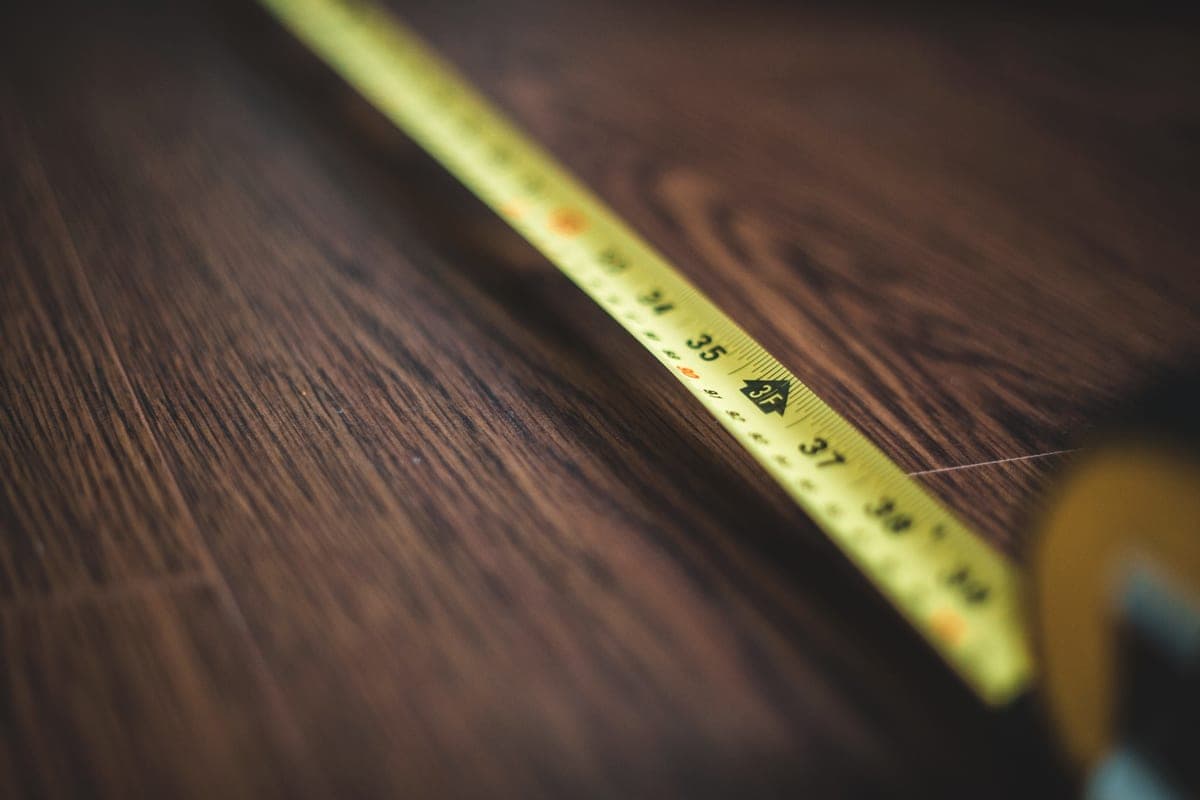
Measure four things first: the walking area plus about 12 inches behind it, the height of the gap it will be stored in, the doorway it has to come through, and your desk clearance if it goes under a desk. Then read the specs in the order that eliminates fastest: folded height, deck length against your stride, in-use width, unit weight, capacity. Published folded heights across the pads we track run 4.6 to 5.4 inches — and 3 of 8 publish none at all, which is itself an answer.
How this page is funded: the buy links here are Amazon affiliate links, and we earn a commission if you buy through one — at no extra cost to you. It does not change what we rank first, because the commission rate is the same across every machine on this page. Full disclosure.
Step 1: four measurements, before you look at a single machine
Almost every walking pad return is a measurement that was never taken. The machine works; it simply does not fit the room, the gap, the door or the desk. So the first step has nothing to do with products.
One: the walking area.The machine’s in-use footprint plus roughly 12 inches of clear floor behind it, which is where you step off and where you will end up if you drift backward. Published in-use lengths across the pads we track run 32.7 to 58.2 inches and widths 20.4 to 25 inches, so the spread you are planning for is about 26 inches of length and 4.6 inches of width.
Two: the storage gap, measured at its lowest point. Under the sofa at the center leg rather than at the arm; under the bed at the frame rail rather than at the headboard. Typical clearances: 6 inches under a sofa (most sofas sit 4-7 in off the floor; 6 in is the middle of that range. measure yours.), 9 inches under a bed frame, 4inches behind an open door. Those are typical figures, not your home — which is the entire reason this step is a tape measure rather than a table.
Three: the doorway and the route to it.A folded pad is a long flat slab, and the problem is rarely the door width — it is the turn at the top of a staircase and the landing with a radiator on it. If the machine arrives boxed, the box is bigger than the machine.
Four: desk clearance, if it goes under a desk.Measure from the floor to the underside of the desk, then subtract the pad’s in-use height. What is left is the room your foot has at the top of each step. If the desk is height-adjustable, measure its maximum instead and do the other subtraction: elbow height plus deck height against that maximum. The clearance arithmetic in full.
Five minutes, four numbers, written down. Everything below is read against them.
Step 2: the five published figures, in the order that eliminates fastest
Specifications are usually read in the order a listing presents them, which is the order that sells. Read them instead in the order that removes the most machines per figure.
1. Folded height. This is the gatekeeper for anyone whose pad has to disappear, and it is the figure most reviews skip. Published folded heights among the pads we track run 4.6 to 5.4 inches, and the difference between the ends of that range is the difference between clearing a 6 inch sofa gap and not. 3 of the 8pads we track publish no folded height at all — for those, the honest position is that nobody can tell you whether they fit, including us. Every folded footprint against a real sofa, bed and closet, with the margin in inches.
2. Deck length, against your stride. Stride length is commonly given as roughly 0.41 to 0.45 times height. At 0.43, a walker of 5 ft 10 in strides about 30.1 inches, and a walker of 5 ft 4 in about 27.5 inches. Published deck lengths run 27.6 to 47.6 inches and belt widths 15 to 16.5 inches. We publish the multiplier so you can redo this with your own measured stride, which is better than any rule of thumb. The deck-length ranking for a taller walker.
3. In-use width. The figure that decides whether the machine fits between desk legs, beside a PC tower, or down the side of a bed. The spread across the pads we track is 20.4 to 25 inches — nearly 5 inches, which in a small room is not a detail.
4. Unit weight. Published weights run 40 to 69.5 lb. This is not about whether you can lift it once; it is about whether you will move it twice a day for a year. Anything over roughly 55 lb is a real lift rather than a nudge, and it is also the figure that decides whether moving apartment involves a second person. Unit weight against stairs and walk-ups.
5. Capacity.Last, not first — because published maximum user weights in this category cluster tightly: 220 to 300 lb across the pads we track. It eliminates few machines for most buyers, which is exactly why it belongs at the bottom of the list rather than the top, and why a listing that leads with it is leading with the easy number. The published capacity ranking.
Step 3: the three figures that do not exist
Part of choosing well in this category is knowing which questions have no published answer, so you stop searching for one and start deciding without it.
Noise, for most machines. 6 of the 8 pads we track publish no decibel figure whatsoever. The ones that do state a single number with no distance, no speed, no load and no test method attached, which makes cross-brand comparison meaningless even where two figures exist. If noise is your deciding factor, the useful move is to measure your own room rather than to shop for a number. What the makers actually publish about noise.
Impact through the floor.Nobody publishes anything at all here, and for an apartment it is usually the real complaint — footfall energy into the structure rather than motor noise into the air. A mat changes the first and not the second. The apartment version of this question, including the lease.
How long you can run it.One maker in this category publishes a continuous-use limit: KingSmith’s FAQ states about an hour at a time followed by roughly half an hour off, and says the automatic stop after long use is by design rather than a fault. That is the only duty-cycle figure available anywhere in the category, and it reframes all-day walking as blocks with rests rather than one long session. What all-day use actually looks like against that limit.
Step 4: the fork most buying guides skip
Before buying a pad, it is worth being honest about whether a pad is the machine for your room and your job. Two forks matter.
If you cannot stand while you work, buy a seated machine instead.An under-desk bike, elliptical or stepper keeps your hands completely still, puts no footfall into the floor, and costs a fraction of the floor area. We rank those separately because the deciding figures are different ones — pedal clearance rather than deck height. The seated machines and the pad-against-bike comparison.
If your constraint is motivation rather than weather or space, a pad may not be the answer. Walking outside is free, and we would rather say so than sell a machine into a cupboard. The honest comparison against the free option.
Quick picks
Four machines, one for each outcome the procedure below actually produces: the smallest fold, the narrowest body, the one with something to hold, and the smallest permanent floor area. Select a row to jump to the full write-up. We have not walked on any of these — here is exactly what we did instead.
| # | Model | Best for | Key figure | Price |
|---|---|---|---|---|
| 1 |  WalkingPad Z1 The only pad here that folds in half AND stays under 5.5 inches folded, which is the combination a small apartment actually needs. | Smallest fold | 31.8 in folded length | |
| 2 |  WalkingPad C2 The narrowest pad we list at 20.4 inches wide, which is the one that fits a genuinely tight closet — you pay for it in belt width. | Narrowest body | 20.4 in wide | $429.00 · View on Amazon Price as of October 22, 2026. #ad How we’re funded |
| 3 |  UREVO Strol 2E The lightest machine here that still has a safety handle, and the only one that goes fast enough to jog on. | Has a handle | 4.6 in folded height | $189.99 · View on Amazon Price as of October 22, 2026. #ad How we’re funded |
| 4 |  Lifepro PacerMini A 27.6 inch belt is short enough to be a real constraint, but it is the only pad here that publishes both an incline figure and a decibel figure. | Smallest floor area | 32.7 x 25 in |
The ranking that matches your four numbers
The point of the procedure is that it tells you which ranking to read rather than leaving you to read all of them.
Storage gap tighter than about five inches, machine has to disappear daily: walking pads for small spaces. Rented apartment with someone below you: the apartment ranking. Going under a desk you work at: pads ranked on deck height for a standing desk. Walking over 5 ft 9 in or with a long stride: the deck-length ranking. Want something to hold on to: the pads with a handle, which is a shorter list than you would expect. And once a machine is chosen, the accessories that are actually required is one bottle of silicone and a short argument about mats.
What we have not done
We have not walked on these machines, and no figure on this page is ours except the arithmetic. Every range above is computed at build time from the published specification of each pad in our registry, read from the source named below on the date recorded there. Where a maker publishes nothing, the count of machines publishing nothing is printed instead of an estimate — that absence is the finding. The full method.
Questions people actually ask
How do I choose a walking pad?
Measure before you shop, in this order: the floor area where you will walk plus about 12 inches behind it as a step-off zone, the height of the gap where the machine will be stored, the width of the doorway it has to come through, and the clearance under your desk if it goes under one. Then read the published figures in the order that eliminates fastest - folded height first, deck length against your stride second, in-use width third, unit weight fourth, capacity last. Four measurements and five figures settle it. Brand, app and color do not.
What is the most important specification on a walking pad?
Folded height, if the machine has to be put away, and deck length if it does not. Folded height is the figure that decides whether the pad disappears under a sofa or lives in your living room forever, and it is also the figure most reviews omit. Deck length decides whether your stride fits at the speed you want to walk. Everything else - motor power, app features, the number of preset programs - changes the experience at the margin. Those two change whether you use the thing at all.
How much space do you need for a walking pad?
Plan for the machine's own in-use footprint plus roughly 12 inches of clear floor behind it, which is where you step off. Across the pads we track the published in-use lengths run from 32.7 to 58.2 inches and widths from 20.4 to 25 inches. The storage number is the one that catches people out: a folded pad is only genuinely out of the way if its folded height clears the gap you intend to slide it into, and typical sofa clearance is 4 to 7 inches.
Does a walking pad need to be long enough for my stride?
Yes, and it is arithmetic rather than opinion. Walking stride length is commonly given as roughly 0.41 to 0.45 times height, so a 5 ft 10 in walker is looking at about 30.1 inches per stride and a 5 ft 4 in walker about 27.5 inches. Published deck lengths across the pads we track run 27.6 to 47.6 inches. The rule we use: the shorter the deck, the slower the speed it stays comfortable at, because stride lengthens as pace rises.
Should I buy a walking pad with an incline?
Only if you have decided incline is the point, because it costs you elsewhere. 5 of the 8 pads we track publish no incline figure at all, and the ones that do raise the deck - which is height you then have to give back at a desk, and height your foot has to clear when you step on. Incline is a real training tool and a real constraint in a small room, and which of those it is depends on whether the pad lives under a desk.
Is it worth buying a cheap walking pad?
It can be, as long as the listing publishes the numbers you need to check. The failure mode in this category is not a cheap machine, it is an undocumented one: one of the pads we track publishes no dimensions whatsoever - no folded height, no footprint, no belt size - which means nobody can tell you whether it fits the gap you measured. A cheap pad with a full spec table is a defensible purchase. A cheap pad with no spec table is a guess, at any price.
Read next
- Will it fit? Folded pads against real apartment storage — the table that answers step one's second measurement, with margins in inches.
- Best walking pads for small spaces — the ranking for a reader whose storage gap did the eliminating.
- Walking pad dimensions, model by model — every published figure in one table, if you would rather read than be ranked.
- Are walking pads worth it? — the question that belongs before this one, answered without a sales pitch.
- Walking pad accessories: what you actually need — the one required item, and the most-requested one that does not exist.
- Shoes, socks or barefoot on a walking pad? — the one footwear instruction any maker here puts in writing, and what the belt widths imply.
Sources
- WalkingPad Z1 - walkingpad.com product spec table: published in-use and folded dimensions, belt size, unit weight, capacity, speed, incline and any noise figure, which are the inputs to every range computed on this page (read 2026-07-24)
- WalkingPad C2 - walkingpad.com product spec table: published in-use and folded dimensions, belt size, unit weight, capacity, speed, incline and any noise figure, which are the inputs to every range computed on this page (read 2026-07-24)
- WalkingPad P1 - walkingpad.com product spec table: published in-use and folded dimensions, belt size, unit weight, capacity, speed, incline and any noise figure, which are the inputs to every range computed on this page (read 2026-07-24)
- WalkingPad A1 Pro - walkingpad.com product spec table: published in-use and folded dimensions, belt size, unit weight, capacity, speed, incline and any noise figure, which are the inputs to every range computed on this page (read 2026-07-24)
- UREVO Strol 2E - urevo.com product spec table: published in-use and folded dimensions, belt size, unit weight, capacity, speed, incline and any noise figure, which are the inputs to every range computed on this page (read 2026-07-24)
- Lifepro PacerMini - Rehabmart retail listing spec table: published in-use and folded dimensions, belt size, unit weight, capacity, speed, incline and any noise figure, which are the inputs to every range computed on this page (read 2026-07-24)
- Sunny Health & Fitness TreadPad Sleek Stride (SF-T722069) - sunnyhealthfitness.com product spec table: published in-use and folded dimensions, belt size, unit weight, capacity, speed, incline and any noise figure, which are the inputs to every range computed on this page (read 2026-07-24)
- DeerRun Under-Desk Walking Pad - Amazon retail listing: published in-use and folded dimensions, belt size, unit weight, capacity, speed, incline and any noise figure, which are the inputs to every range computed on this page (read 2026-07-24)
- KingSmith / WalkingPad - brand FAQ: the one-hour continuous-use limit with a roughly half-hour cool-down, stated as design rather than fault; the only duty-cycle figure published in this category (read 2026-10-11)