Shoes, socks or barefoot on a walking pad?
One maker manual answers this in four words. The same brand's public FAQ does not mention footwear at all. So here is the evidence that does exist, and the geometry that fills the gap.
By Stephen V. · Last updated
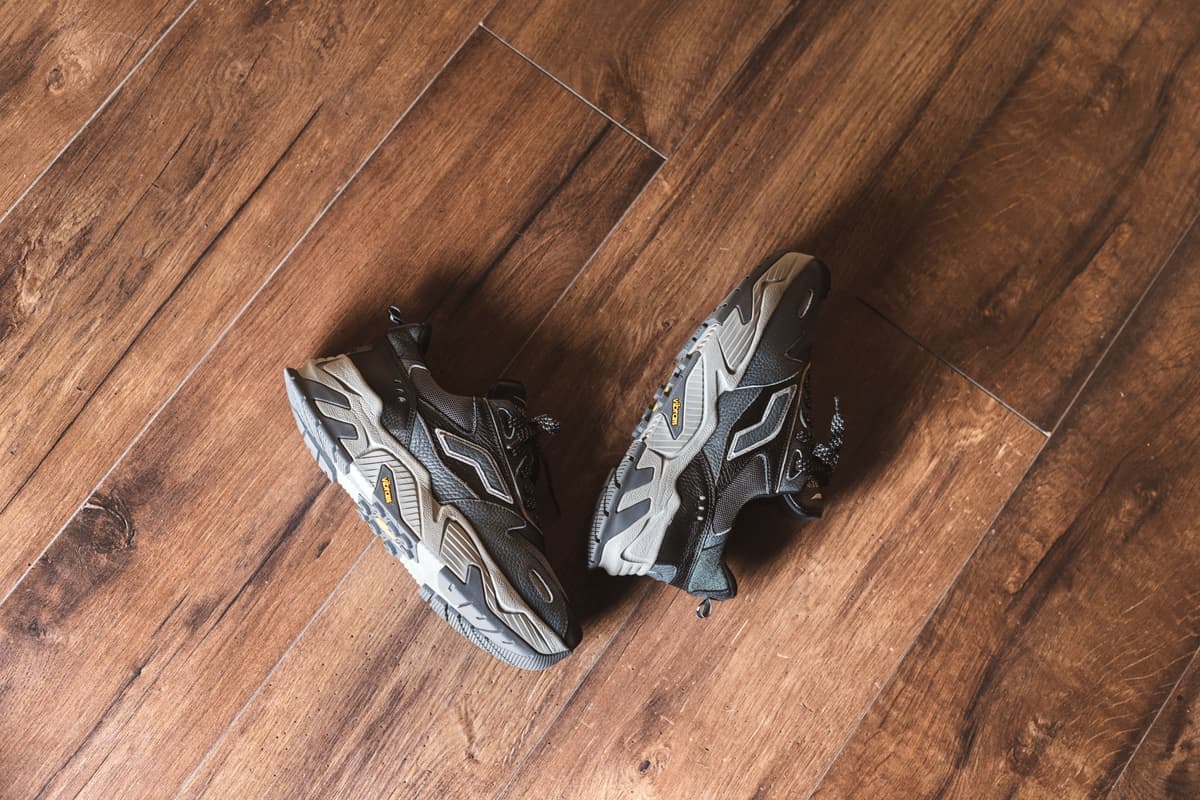
Shoes, and the maker evidence for it is four words long. A KingSmith WalkingPad manual says “Please wear sports shoes and clothes”; the same brand’s public FAQ does not mention footwear anywhere. Our own reading of the machines agrees with the four words and adds the ranking the question actually needs: socks are the worst option— smooth sole, smooth belt, and no handrail on all but one of the 8 pads we track. Barefoot is defensible only at the bottom of the speed range.
How this page is funded: the buy links here are Amazon affiliate links, and we earn a commission if you buy through one — at no extra cost to you. It does not change what we rank first, because the commission rate is the same across every machine on this page. Full disclosure.
What the makers actually say, which is almost nothing
This question gets answered confidently all over the internet and almost never with a citation, so here is the whole of what we could read from the makers of the machines we track, on 2026-10-13.
One instruction exists. A KingSmith WalkingPad manual (model ORWKPG1) states, on its English safety page: “Please wear sports shoes and clothes.”The French edition of the same manual carries the identical line. That is it — no sole type, no tread requirement, no explanation, and no statement about bare feet either way.
The brand’s public FAQ does not mention footwear at all.We read walkingpad.com’s FAQ in full looking for shoes, socks, bare feet or slipping, and the document contains none of them. This is the same FAQ that will tell you about continuous-use limits and power cords, so the absence is not for lack of space.
One maker does not publish its manual as text.Sunny Health & Fitness’s manual page for the TreadPad model we track offers the document by email or as an online preview rather than as readable page content, so there is no footwear line there for us to quote. We are recording that as unread rather than as absent, because those are different things.
That is a thin evidence base for a question people ask constantly, and it is why the rest of this page argues from the machines’ own published geometry rather than from a recommendation nobody has published.
Why socks rank last of the three
Socks are the option we would actively argue against, and the argument is built from published figures rather than from caution.
There is nothing to hold. Exactly one of the 8pads we track publishes a handle — the UREVO Strol 2E — which means that on every other machine here, a slip has no recovery hardware at all. On a gym treadmill you grab a rail. On a walking pad you step off a moving belt. The pads with a handle, which is a one-item list.
The belt is narrow. Published belt widths across the pads we track run 15 to 16.5 inches, and belt lengths 27.6 to 47.6 inches. A sock foot drifting an inch sideways on a 15 inch belt is most of the way to the edge.
Those two findings pull against each other, and it is worth saying so rather than tidying it away: the one pad here that publishes a handle is also the one with the narrowest published belt, at 15 inches. There is no machine in this registry that gives you both something to hold and the widest walking surface.
And there is a documented way the deck becomes slippery. KingSmith’s own lubrication article warns that over-lubricating pushes surplus silicone up to the top surface of the belt. That is the one failure in this category that genuinely makes the walking surface slippery, it is caused by maintenance rather than by wear, and it is far worse in socks than in shoes. How much silicone the maker actually asks for — it is one to two drops.
Smooth sole, narrow moving belt, nothing to grab, and a documented route to a slick surface. Of the three options in the title, this is the one with no argument in its favor beyond comfort.
The barefoot case, and what it costs you
Barefoot has a real case, and it is worth stating properly rather than dismissing: bare skin grips better than a sock, you can feel where you are on the belt, and at the speeds a desk pad actually gets used at — the slow end of a range that tops out between 3 and 6.2 mph across the machines we track — the consequences of a stumble are small.
What it costs: no protection at the front roller, where a moving belt meets a fixed housing; no structure under a foot that is doing an hour of repetitive work; and a belt that is designed as a drive surface rather than a floor. It is also the option furthest from the only maker instruction that exists, which asks for sports shoes.
If you are going to do it anyway — and plenty of people walking at 1 mph beside a desk will — the sensible version is the bottom of the speed range, a machine with something to hold if you have one, and a clean belt. Which leads to the one genuinely useful thing the makers do publish about feet.
Which shoes, and what we are not going to claim
The instruction says “sports shoes” and stops. We are not going to turn four words into a specification, so here is the honest split between what is published and what is inference.
Published: KingSmith’s maintenance article names rubber from shoes, along with airborne dust and hair, as what reaches the belt and the motor, and asks for a weekly wipe-down of the belt and frame plus vacuuming around the machine. That is a direct argument for one clean indoor-only pair rather than whatever you wore outside, and it is the maker’s argument rather than ours. The maintenance jobs in order of what they actually prevent.
Inference, clearly labeled as ours: on a belt 15 to 16.5 inches wide, a stable sole that does not overhang the belt edge matters more than cushioning, because the failure mode here is lateral rather than vertical. A shoe you can keep on for an hour beats a shoe that is better in every specification and comes off after twenty minutes.
What we will not tell you is a heel-to-toe drop, a sole compound or a model. No maker in this category publishes a footwear specification, we have not walked on these machines, and a shoe recommendation dressed up as a spec is exactly the kind of invented authority this site exists to avoid.
The clearance your shoes eat at a desk
Here is the part of the footwear question that is actually a measurement problem, and it is the reason this page sits next to the desk pages rather than the safety ones.
A walking pad raises you by its in-use height before you put anything on your feet. A shoe sole raises you again. If the machine lives under a desk, the number that decides whether the setup works is the gap left above your foot at the top of a step — not the gap above the bare deck, which is what every listing implicitly quotes.
So measure it with the shoes on. Stand on the deck in the pair you will actually wear, and measure from the top of your foot to the underside of the desk. If that number is uncomfortable, the fixes in order of cost are: a thinner-soled indoor pair, a taller desk, or a pad with a lower deck. The clearance arithmetic for every machine we track and the pads ranked on deck height for a standing desk are the two pages that do this with published numbers.
Quick picks
Not a ranking of footwear - a ranking of the three machine figures that decide how much your footing matters: whether there is anything published to hold on to, how long the belt is, and how wide it is. Select a row to jump to the full write-up. We have not walked on any of these — here is exactly what we did instead.
| # | Model | Best for | Key figure | Price |
|---|---|---|---|---|
| 1 |  UREVO Strol 2E The lightest machine here that still has a safety handle, and the only one that goes fast enough to jog on. | Only published handle | Handle, 15 in belt | $189.99 · View on Amazon Price as of October 22, 2026. #ad How we’re funded |
| 2 |  WalkingPad Z1 The only pad here that folds in half AND stays under 5.5 inches folded, which is the combination a small apartment actually needs. | Longest belt here | 47.6 x 15.7 in belt | |
| 3 |  WalkingPad P1 A 16.5 inch belt on a pad that still folds to 32.5 inches — the wider walking surface is the reason to pick it over the Z1. | Widest belt here | 47 x 16.5 in belt |
The two things this page actually implies buying
Neither of these is footwear. The silicone is here because the one documented way a walking surface gets slippery is over-lubrication, and the maker publishes the quantity that avoids it. The sliders are here because the other half of the maker's cleaning instruction is vacuuming around the machine, which is a different job when you can move it four feet without dragging it.
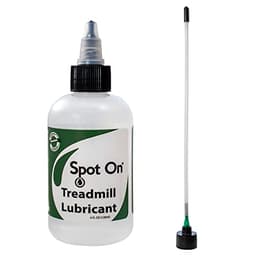
Spot On — Premium Treadmill Belt Lubricant, 100% pure silicone
The one consumable a walking pad actually has. A dry deck raises friction, and rising friction is the mechanism behind most of the symptoms people report — a sluggish belt, a hesitation as the foot lands, a motor working harder for the same speed. The listing states 100% pure silicone and ships with a long application tube, which is what gets oil under the belt without lifting the machine.
The catch: Your manual is the authority on quantity and interval, not this page and not the bottle. Over-lubricating is a genuine fault: excess silicone migrates to the top of the belt and makes a machine with no handrail slippery underfoot. If your manual names a specific product, buy that one instead.
Amazon retail listing, read 2026-08-17. We have not used this item; it is here because a page on this site already told you to do the job it does.
$9.95 · View on AmazonPrice as of October 22, 2026. #ad How we’re funded
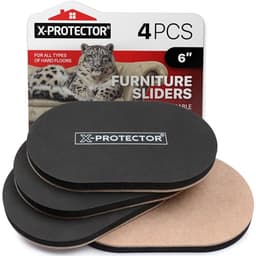
X-Protector — Felt Furniture Sliders for hardwood floors, 4 pack, 6 x 3.5 in
A folded pad weighs 40 to 69.5 lb depending on the model, and the daily job is not carrying it — it is moving it four feet to where it lives without dragging metal across a floor you are going to be inspected on. At 6 x 3.5 inches these are large enough to sit under the ends of a folded deck rather than the corner of a chair leg.
The catch: Felt is for hard floors. On carpet it does nothing, and on a floor with grit already on it a slider drags the grit rather than the machine. Sweep first. They also do not reduce noise while you are walking — nothing under a stationary object helps while the machine is in use.
Amazon retail listing, read 2026-08-17. We have not used this item; it is here because a page on this site already told you to do the job it does.
What we have not done
We have not walked on these machines in shoes, in socks or in bare feet, and we have not tested a belt surface for grip. Every maker statement above is quoted from the document named in the sources with the date we read it; where a document could not be read, it is recorded as unread rather than as silent. Every machine figure is the maker’s own, computed from our registry at build time. The lateral-stability argument is clearly marked as our inference, because that is what it is. The full method.
Questions people actually ask
Do you need to wear shoes on a walking pad?
The only instruction we could find from the maker of any machine we track says yes, in four words: "Please wear sports shoes and clothes", in a KingSmith WalkingPad manual. It is worth knowing how thin that evidence is - the same brand's public FAQ does not mention footwear anywhere, and Sunny does not publish the manual for the model we track as readable text at all. Our own position follows the geometry rather than a preference: most of these machines have no handrail, and published belt widths are narrow, so footing you can trust matters more here than on a gym treadmill with two rails.
Can you use a walking pad barefoot?
No maker of a machine we track publishes permission for it, and none that we could read publishes a prohibition either - the documentation is simply absent. What we would say is that barefoot is the version of this with the least margin for error: nothing grips, nothing protects your toes at the front roller, and the belt surface is a moving textured sheet rather than a floor. If you do it anyway, do it at the bottom of the speed range on a machine with a handle, and keep the belt clean - the maker's own maintenance article names shoe rubber, dust and hair as what ends up on it.
Is it safe to walk on a walking pad in socks?
Socks are the one option we would argue against on the published facts rather than on taste. They remove the grip bare skin has without adding any of the structure a shoe has, which is the worst of both. The specific risk is documented, if indirectly: KingSmith's lubrication article warns that over-lubricating pushes silicone up to the top surface of the belt, and most of the pads we track have nothing to grab if that happens. Smooth sole plus smooth belt plus no handrail is the combination worth avoiding.
Do shoes damage a walking pad belt?
Not directly, but they are named as the thing that dirties it. KingSmith's own maintenance article identifies rubber from shoes, along with airborne dust and hair, as what reaches the belt and motor, and asks for a weekly wipe-down of the belt and frame plus vacuuming around the machine. That points at a simple habit rather than a purchase: keep one clean indoor-only pair for the pad, and the weekly wipe becomes a shorter job.
Do shoes change the desk clearance arithmetic?
Yes, and it is the part nobody mentions. A walking pad already raises you by its in-use height, and a shoe sole raises you again. If the pad goes under a desk, measure the clearance while standing on the deck in the shoes you will actually wear, because the number that matters is the gap left above your foot at the top of each step - not the gap above the bare deck.
What kind of shoes are best for a walking pad?
We are not going to invent a specification the makers do not publish. The one instruction we found says "sports shoes" and says nothing about sole type, drop or tread. What the machine's own figures imply: a belt 15 to 16.5 inches wide gives you very little lateral room, so a wide, stable sole that does not hang over the belt edge is doing more for you than any cushioning claim. Indoor-only, clean, and whatever you can walk in for an hour.
Read next
- Walking pad safety, without the handrail — what changes when the machine you are standing on has nothing to hold.
- Walking pads with a handle — the one machine here that publishes one, and why that matters for footing.
- How to lubricate a walking pad — the one-to-two-drop quantity, and what over-lubricating does to the belt surface.
- Walking pad maintenance — the weekly wipe-down, and the maker naming shoe rubber as what reaches the belt.
- How to choose a walking pad — where belt width and deck height sit in the order that eliminates machines fastest.
- Desk clearance for an under-desk machine — the arithmetic your shoe sole changes, with every published height.
Sources
- KingSmith WalkingPad (model ORWKPG1) - user manual: the single footwear instruction, “Please wear sports shoes and clothes” (English page 10; the French edition carries the same line on page 34). No mention of bare feet, socks, sole type or slipping anywhere in the document (read 2026-10-13)
- KingSmith / WalkingPad - brand FAQ, read in full for this page looking for shoes, socks, bare feet and slipping: footwear is not mentioned anywhere in the document (read 2026-10-13)
- KingSmith / WalkingPad - treadmill maintenance article: rubber from shoes plus airborne dust and hair named as what reaches the belt and motor, with a weekly wipe-down of belt and frame and vacuuming around the machine (read 2026-10-06)
- KingSmith / WalkingPad - “How to Lubricate a Treadmill”: the one-to-two-drop quantity and the warning that surplus silicone migrates to the top of the belt (read 2026-10-06)
- Sunny Health & Fitness SF-T722069 - manual page for the TreadPad model we track: the manual is offered by email or online preview rather than as readable page content, so no footwear instruction could be read from it. Recorded as unread, not as absent (read 2026-10-13)
- UREVO Strol 2E - urevo.com product spec table: the published belt length and width, top speed and handle status used in the footing argument (read 2026-07-24)
- WalkingPad Z1 - walkingpad.com product spec table: the published belt length and width, top speed and handle status used in the footing argument (read 2026-07-24)
- WalkingPad P1 - walkingpad.com product spec table: the published belt length and width, top speed and handle status used in the footing argument (read 2026-07-24)