Why is my mini stepper squeaking?
Every stepper in this category gets its resistance from a hydraulic cylinder. That is where the noise comes from - and the one maker that mentions maintaining the cylinder says you cannot.
By Stephen V. · Last updated

It is the hydraulic cylinder or one of the pivot pins the pedal arms swing on. All three steppers we track are hydraulic, and the only maker in the category that mentions maintaining that cylinder says it is a precision engineered, maintenance free sealed component— so a bottle of oil is the wrong first move. The figure that decides what a squeak actually costs you is the warranty, and the published spread runs from 5 years parts and labor to no stated term at all.
What is making the noise
Start with the mechanism, because it narrows the problem to one part before you touch anything. A walking pad has a motor, a belt, two rollers and a deck, which is four candidates for a noise. A mini stepper has almost nothing in it: two pedal arms, the pivots they swing on, a frame, and a hydraulic cylinder under each pedal that supplies the resistance.
We re-read all three maker pages on 2026-10-17and every one of them is hydraulic. Stamina’s page states “Two adjustable-resistance hydraulic cylinders provide a smooth stepping motion”. Niceday states “smooth hydraulics that will maintain high resistance” and a “Quiet hydraulic system”. Xiser is the most specific of the three: a “patented hydraulic piston system” that “uses a silicone-based fluid that travels from one cylinder to another while stepping”.
That last sentence is worth reading twice, because it describes the whole category rather than one product. A hydraulic cylinder resists by forcing fluid through a restriction, which has two consequences you can hear. The first is that the resistance is speed-dependent: push faster and it pushes back harder, which is not how the magnetic brake in an under-desk bike behaves. The second is that the cylinder is the only part of a stepper under real load on every single repetition — so when something in a stepper starts making a noise, the cylinder and its two end pivots are where to look first, not last.
Three sources, and how to tell them apart
We have not disassembled any of these machines, so what follows is not a repair manual — it is a way of narrowing down which part you are hearing using nothing but the mechanism above and a change of one variable at a time.
1. The cylinder: the noise follows your pace. Because hydraulic resistance rises with speed, a cylinder noise usually gets louder and higher as you step faster and fades as you slow down, and it is not tied to any particular point in the stroke. Try it at the slowest pace you can hold for thirty seconds. If the noise nearly disappears at a crawl and returns at pace, you are listening to fluid being pushed through a restriction.
2. A pivot or bushing: the noise follows your position. A dry pivot squeaks at the same point of travel every time, usually the very top or the very bottom where the arm reverses direction, and it does not care much how fast you are going. The useful test is to stand on one pedal at a time and press it slowly through its full travel with your hand on the frame. A noise that repeats at the same point of a slow, deliberate stroke is a pivot, not a cylinder.
3. The feet on the floor: the noise follows the surface.This one is the most common and the least interesting, and it is free to rule out. Move the machine onto a rug or a mat and step again. If it goes quiet, nothing inside the machine was ever making the noise — the frame was moving microscopically against a hard floor. Not one of the three makers publishes anything about its feet, their material or a non-slip claim, which we checked again on 2026-10-17.
There is a fourth category that is not a noise at all, and it is the one worth acting on: visible fluid around a cylinder, a pedal that stops returning to the top of its travel, resistance that is now obviously different between the left and right sides, or a frame that has started to rock. Those are changes in how the machine works. That is what the next two sections are about.
Why oiling it is the wrong first move
The instinct from the walking-pad world is to reach for lubricant, and on a pad that instinct is correct and well documented. Every treadmill maker specifies the same substance, KingSmith publishes its own lubrication article with an interval and a quantity, and the failure a dry deck causes is well understood. What the makers actually specify, quoted, with the products they name as unsuitable.
The stepper category is the opposite, and the contrast is the most useful thing on this page. Across three maker pages re-read on 2026-10-17 there is not one lubrication instruction, not one interval, not one named product and not one squeak procedure. What there is instead is a single statement about maintaining the cylinder, from Xiser, and it says the part cannot be maintained: “a precision engineered, maintenance free sealed component”.
Take that at face value and it changes what you should do. A sealed cylinder has nothing to oil from the outside; the fluid Xiser describes travels between cylinders inside the assembly. Spraying a penetrating oil at a sealed part achieves nothing except possibly attacking the seal, and we are not going to recommend it. The pivots are a different matter — they are ordinary mechanical joints — but no maker here publishes what to put on them either, so we are not going to invent a specification for a part we have not seen.
Which leaves the honest conclusion, and it is not the one a troubleshooting page usually reaches: on a mini stepper, a cylinder noise is a warranty question rather than a maintenance one. That makes the warranty term the most important specification in the category, and almost nobody comparing these machines reads it.
What to look for if you are replacing it
If the machine is out of coverage, or there was never any coverage to be out of, the question becomes which stepper to buy instead. Four things to check, in this order, and all four are published figures rather than opinions.
1. The warranty term, in writing, with the word “parts” in it. A frame warranty is not a cylinder warranty, and the cylinder is the part this page is about. The spread across three machines is the widest of any specification in this category: five years parts and labor at one end, ninety days on parts at the other, and nothing stated at all in the middle.
2. Whether the maker says anything about the cylinder.One of three does. A company that describes its own resistance mechanism, names the fluid in it and tells you whether it can be serviced is a company you can hold to something later. Two of the three publish the word “hydraulic” and nothing further.
3. A published maximum user weight.This is the one figure where the stepper category outperforms the rest of this site: all three publish one — 400 lb, 300 lb and 250 lb — where only one of six seated machines does. Every published capacity figure in the seated and standing categories. A cylinder carrying load closer to its rating is working harder on every repetition.
4. The frame material, which is the other load path.Niceday publishes a 1.5 mm steel construction figure on its page and, in a different section of the same page, describes the frame as robust alloy steel — two descriptions we are printing both of rather than silently picking one. Xiser publishes an aircraft-grade cast aluminum alloy, and Stamina a heavy duty steel frame with no gauge.
The three steppers, ranked on the remedy rather than the noise
Nobody can tell you which of these squeaks, because none of the three publishes a decibel figure and we have not used them. So this is ranked on what is actually knowable in advance: what happens after it starts.
The one with a real parts warranty: the Xiser Commercial Mini Stairmaster. For the buyer who wants the cylinder covered rather than the frame. Its own page states a full 5 year parts and labor warranty for home use, and a 1 year warranty for commercial gym or institution use — the only parts-and-labor term in the category and five times the next longest. It is also the only maker that describes its resistance mechanism in any detail, publishes the highest capacity on this entire site at 400 lb, and states three knob settings rather than an unquantified “adjustable”. The costs are real: it is the most expensive machine on this site, Xiser publishes no dimensions and no unit weight at all, and the page calls it “completely silent” with no number behind it.
The one with a defined term and somewhere to put it: the Stamina SpaceMate Folding Stepper. For the buyer who wants the terms spelled out and the machine out of the room afterwards. Stamina publishes 1 year on the frame and 90 days on parts— short, but stated, which Niceday’s page does not manage — alongside assembled size, folded size, a 45 lb product weight and a 250 lb capacity. It is the only stepper here with handlebars and the only one that folds, to 9.5 in tall. Against it: 90 days is a very short parts window for the part most likely to fail, it is the heaviest stepper here, it needs assembly, and Stamina’s own specification tab prints two different assembled sizes, which we flag rather than resolve.
The smallest, with the least in writing: the Niceday Mini Stair Stepper. For the buyer whose constraint is floor area and who is prepared to treat the machine as disposable. A published 16 x 12 x 14 in footprint is about 1.3 square feet, a quarter of what a walking pad needs, and the 300 lbcapacity is high for the size. But on the question this page is about, it publishes the least of the three: no warranty term anywhere, only an undefined “lifetime service promise”, no product weight, no resistance level count and no maintenance guidance — while its page promises “noise-free stepping”.
How this page is funded: the buy links here are Amazon affiliate links, and we earn a commission if you buy through one — at no extra cost to you. It does not change what we rank first, because the commission rate is the same across every machine on this page. Full disclosure.
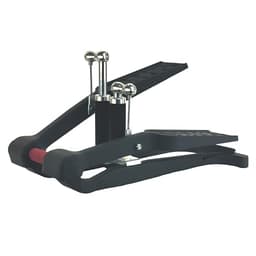
Xiser Commercial Mini Stairmaster
The highest published capacity here
The most expensive machine on this entire site and the one that publishes the least about itself — a 400 lb capacity, an aluminum frame, three resistance settings and no dimensions at all.
Price as of October 21, 2026. #ad How we’re funded
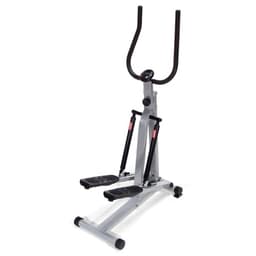
Stamina SpaceMate Folding Stepper
Handlebars, and it folds away
The only stepper here with handlebars and the only one that folds — 9.5 inches tall folded, which is the whole argument for buying a stepper you cannot leave out.
Price as of October 21, 2026. #ad How we’re funded
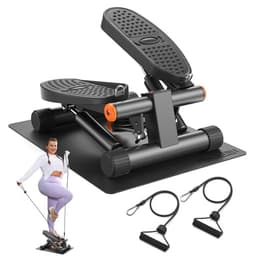
Niceday Mini Stair Stepper
Smallest footprint of anything here
A 16 x 12 inch footprint and a published 300 lb capacity — the most machine per square foot of anything on this site, and the smallest thing here you can genuinely raise your heart rate on.
| Model | In use (L x W x H) | Folded (L x W x H) | Unit weight | Max user | Material |
|---|---|---|---|---|---|
| Niceday Mini Stair Stepper | 16" L x 12" W x 14" Hmanufacturer spec | Not publishednot published | Not publishednot published | 300 lbmanufacturer spec | 1.5 mm steel framemanufacturer spec |
| Stamina SpaceMate Folding Stepper | 30.25" L x 16.25" W x 54.5" Hmanufacturer spec | 38.5" L x 16.25" W x 9.5" Hmanufacturer spec | 45 lbmanufacturer spec | 250 lbmanufacturer spec | Heavy duty steel framemanufacturer spec |
| Xiser Commercial Mini Stairmaster | Not publishednot published | Not publishednot published | Not publishednot published | 400 lbmanufacturer spec | Aircraft grade cast aluminum alloymanufacturer spec |
| Machine | Published warranty | Says anything about the cylinder? |
|---|---|---|
| Xiser Commercial Mini Stairmaster | 5 year parts and labor (home use); 1 year (commercial gym or institution use) | Yes — a patented hydraulic piston system using a silicone-based fluid, described as a maintenance free sealed component |
| Stamina SpaceMate Folding Stepper | 1 year frame, 90 days parts | Partly — two adjustable-resistance hydraulic cylinders named, with no maintenance guidance |
| Niceday Mini Stair Stepper | Not published — only an undefined “lifetime service promise” | Partly — a quiet hydraulic system named, with no maintenance guidance |
Three noise claims, zero numbers
There is one more thing worth saying to anybody who arrived here because a machine they bought as “silent” now is not. The claims in this category are adjectives and nothing else. Niceday states that its “quiet hydraulic system ensures noise-free stepping”. Xiser states that the machine is “completely silent”. Stamina makes no noise claim at all for the SpaceMate, which is arguably the most honest of the three. Across three products there is no decibel figure, no measuring distance, no load and no test method.
That is not unique to the steppers. Of the nine seated and standing machines we track, none publishes a decibel figure, which is why our noise ranking for that half of the site had to be built on mechanism rather than on measurement. The quiet ranking, and what we did when the criterion returned nothing for every candidate. On the walking-pad side two of eight makers publish a number, and that is the best this whole market does. The two pads with a published figure.
So “noise-free” on a product page is not a specification you can hold anybody to, and a squeak six months in does not contradict it in any checkable way. The thing you can hold a maker to is the warranty text, which is why it is the table above rather than a footnote.
What we have not done
We have not used, opened or measured any of these machines, and we have not recorded a sound level. Nothing above is a repair instruction: the three-source test is a way of narrowing down which part you are hearing from the mechanism the makers themselves describe, and your own machine’s manual governs what you should do to it. Every quoted phrase was read from the maker’s own page on 2026-10-17 and is reproduced verbatim so you can check it. The full method.
Questions people actually ask
Why is my mini stepper squeaking?
Almost certainly the hydraulic cylinder that supplies the resistance, or one of the pivot pins the pedal arms swing on. Every mini stepper we track is hydraulic rather than magnetic - Stamina states two adjustable-resistance hydraulic cylinders, Niceday states a quiet hydraulic system, Xiser states a patented hydraulic piston system using a silicone-based fluid that travels from one cylinder to another while stepping. The cylinder is where the resistance comes from, so it is also the part under load on every repetition, and it is the first thing to suspect.
Can you lubricate a mini stepper cylinder?
The only maker in this category that addresses the question says no. Xiser describes its hydraulic piston system as a precision engineered, maintenance free sealed component - read on October 17, 2026. Neither Niceday nor Stamina publishes any lubrication instruction, interval or product for the cylinder on its own product page. That is a striking contrast with the walking-pad half of this site, where every maker specifies 100% silicone for the deck and KingSmith publishes its own lubrication article. If the cylinder is sealed, there is nothing to oil, and a squeak from it is a warranty question rather than a maintenance one.
How do I tell a cylinder squeak from a pivot squeak?
Change one thing at a time and listen for what the noise follows. Hydraulic resistance is speed-dependent - it pushes back harder the faster you push it - so a noise that rises and falls with your pace and not with your position in the stroke points at the cylinder. A noise that happens at the same point of every stroke, usually the very top or the very bottom, and does not change much when you slow down, points at a pivot pin or bushing. A noise that stops entirely when you move the machine onto a mat or carpet was never in the machine at all - it was the feet on a hard floor.
Is a squeaking mini stepper dangerous?
We are not going to tell you a machine is safe or unsafe - we have not handled these and we do not rate equipment on safety. What we will say is what to treat as different in kind from a noise: visible fluid around a cylinder, a pedal that no longer returns to the top of its travel, uneven resistance between the two sides, or a stepper that has started to rock on its frame. Those are not noises, they are changes in how the machine works, and they are what a warranty claim is for.
Which mini stepper has the best warranty if it starts squeaking?
The Xiser Commercial Mini Stairmaster, by a wide margin and in writing: its own page states a full 5 year parts and labor warranty for home use, and a 1 year warranty for commercial gym or institution use. Stamina states 1 year on the frame and 90 days on parts for the SpaceMate. Niceday publishes no term at all for its stepper - the only related wording on its site is a lifetime service promise that is not defined anywhere. All three were re-read on October 17, 2026.
Do any mini stepper makers publish a noise figure?
No - not one of the three, which is the same finding as the seated-machine category. What they publish instead is adjectives: Niceday says its quiet hydraulic system ensures noise-free stepping, Xiser says the machine is completely silent, and Stamina says nothing about noise at all. Three claims, zero decibel figures, no distance, no load and no test method. So nobody can tell you in advance which of these squeaks, including us.
Should I just buy a seated machine instead?
If the squeak is the symptom of a machine you have stopped enjoying, it is worth knowing that the whole stepper category is hydraulic and the whole seated category is magnetic. A magnetic brake has no fluid, no seal and no piston - it works by moving a magnet closer to a flywheel - which removes the part this page is about. You give up the weight-bearing element and the small footprint in exchange.
Read next
- How to use a mini stepper — the stroke, the knob and the pace - which is also what changes a cylinder noise.
- Best mini steppers — the full ranking, with every published capacity and frame figure.
- What lubricant does a walking pad need? — the belt-side contrast: a named substance, a published interval and a maker article.
- Walking pad noises, sorted by what makes them — the same approach applied to a machine with four moving parts instead of one.
- Best under-desk cardio for bad knees — the magnetic alternative - no fluid, no seal, no piston, and nothing standing on it.
- Is a mini stepper worth it? — the honest account, including the three buyers a stepper is wrong for.
Sources
- Xiser - product page, re-read 2026-10-17: a patented hydraulic piston system that uses a silicone-based fluid that travels from one cylinder to another while stepping, described as a precision engineered, maintenance free sealed component; three knob settings (high, medium, low); a full 5 year parts and labor warranty for home use and a 1 year warranty for commercial gym/institution use; 400 lb maximum user weight; aircraft grade cast aluminium alloy; completely silent with no decibel figure; no dimensions and no product weight published
- Stamina - SpaceMate product page, re-read 2026-10-17: two adjustable-resistance hydraulic cylinders provide a smooth stepping motion; folded 38.5 x 16.25 x 9.5 in; 45 lb; 250 lb maximum user weight; 1 year frame and 90 days parts warranty; two conflicting assembled sizes printed on the same page; no noise figure and no maintenance or lubrication guidance
- Niceday - product page, re-read 2026-10-17: smooth hydraulics that will maintain high resistance, and a quiet hydraulic system that ensures noise-free stepping; 16 x 12 x 14 in; 300 lb capacity; 1.5 mm steel construction in one section and robust alloy steel in another; no warranty term published, only an undefined lifetime service promise; no product weight, no resistance level count, no maintenance or lubrication guidance and no decibel figure