Will a walking pad damage your floor?
The honest answer is that the arithmetic cannot be finished - and the reason it cannot is more useful than a guess would be.
By Stephen V. · Last updated
Nobody can tell you, and here is exactly where the sum stops.The load on your floor is the machine plus the person on it — about 249.5 lb with the heaviest pad we track and a 180 lb walker. What decides whether that marks a floor is the pressure, which needs the contact area of the feet. Not one of the eight pads we track publishes a foot size, a foot material, or any statement about floor type at all. So use a mat, pick it on published thickness, and treat anybody who gives you a confident yes or no as guessing.
The arithmetic, and where it stops
Start with what can be computed, because it is more than most pages on this subject bother with.
The static load on your floor is not the machine’s weight. It is the machine plus whoever is standing on it. The published unit weights of the pads we track run from 40 lb to 69.5 lb, so with a 180 lb walker the total sits somewhere around 249.5 lb at the top of the range. Two of the eight pads publish no unit weight at all, so for those the sum cannot even be started.
Now the part that decides the outcome. Whether a load marks a floor is a question of pressure— load divided by the area it is carried on — not of load. The same 249.5 lb spread across four wide rubber feet and the same 249.5 lb concentrated on four small hard pucks are completely different propositions for a softwood floor, and the difference is a factor of several, not a few percent.
So we went looking for the foot. Across every maker page and listing this site cites, there is no published foot size, no published foot material, and no published number of feet for any walking pad we track. The denominator of the only equation that answers this question does not exist in the public record. That is why this page does not end in a yes or a no, and why we would distrust any page that does.
One figure we can complete, for contrast, because it is published: the BESTXD rubber pads are 3.94 in square each, so a set of four is about 62.1 square inches of contact. That is a real number you can reason with. It is also the only contact-area figure anywhere in this whole category, and it belongs to a mat rather than to a machine.
A dent and a scratch are different problems
Most advice on this subject fails because it treats floor damage as one thing. It is two, they have different causes, and only one of them is about weight.
A dent is static.A hard foot presses into a softer floor and, given weeks, leaves a permanent impression. This is the pressure problem above, and it is worse on a machine that lives in one spot than on one that is folded away daily — which is one of the few things on this page you actually control. The pads with a published folded size.
A scratch is dynamic.It needs grit and movement. A machine under load does not sit perfectly still — it shifts microscopically with each footfall — and anything abrasive caught between a foot and a finish will mark it. This is why the honest first intervention is not a thicker mat, it is a clean floor and clean shoes, and it is why machine-sliding is a related problem rather than a separate one. Mat-sliding, machine-sliding and belt-slipping, separated.
There is a third thing people mean by “damage” that is not damage at all: what the flat below hears. Footfall is impact, and impact travels through structure in a way airborne motor noise does not. A mat helps with that and does not solve it, and we would rather say so than sell a mat as soundproofing. The two noises a pad makes, and which one carries.
What the makers publish about floors: nothing
It is worth stating the scale of the silence, because it is the reason this page exists in the shape it does. Across the eight walking pads we track — from KingSmith, UREVO, Lifepro, Sunny Health & Fitness and DeerRun — there is not one statement about hardwood, laminate, vinyl, tile or carpet in any published specification we cite. No recommended surface, no prohibited surface, no “use on a mat” instruction in the specs we read.
These are companies that will publish a unit weight to a tenth of a pound and a folded height to a tenth of an inch. The absence is not an oversight in our research; it is a pattern, and it is the same pattern as the cushioning figure nobody publishes and the decibel figure six of eight will not state. The five brands ranked on how much each will put in writing.
Which means the party with something published about point loads on your floor is the maker of the floor, not the maker of the pad. If the floor is new, under warranty, or rented, that is where to look — and a lease is a separate matter again. Setting one up in a place you do not own.
What to look for in a mat
1. Published thickness, because it is the one mechanical figure you get.Thickness is what puts compressible material between a hard foot and a hard floor. The published spread across the four mats we track is 0.16 in to 0.5 in — more than a factor of three — and it is the only specification in the category that varies meaningfully.
2. Coverage measured against your own machine, not against the mat. A mat has to be longer than the pad, because you step off the back of the belt as well as onto it. Our mats roundup ranks on exactly that margin. Every mat sized against every pad.
3. Accept that no mat publishes a load rating.Not one of the four. Nor a material, in three of four cases — “high density” is a marketing phrase rather than a compound, and there is no manufacturer spec page behind any of these listings to check it against. So a mat choice here is a choice between published sizes and published thicknesses, and nothing more.
4. Do not buy a mat to fix noise. It is the wrong tool for that job and buying it for that reason leads to disappointment with a product that was fine.
Three mats, and who each is for
Most floor covered: the Marcy Fitness Equipment Mat (Mat-366). For the buyer whose machine lives out in one place on a floor they care about. At 78 x 36 init is the largest mat here by a wide margin, at the same quarter inch of thickness as the 30 x 60 option — which is to say it is a real treadmill mat being used under a walking pad, with the surplus that implies. The costs: it publishes no material and no mat weight, and 78 inches is a lot of floor to give up in the room this site is usually writing about.
Right-sized with standing margin: the Fitvids High Density Equipment Mat. For the buyer who wants the pad covered and the step-off behind it covered, without carpeting the room. 60 x 30 in at 0.25 inthick clears the longest pad we track with margin behind the belt. Against it: the listing names no material at all, and there is no manufacturer page to check the “high density” phrase against.
Thickest material, least coverage: the BESTXD rubber treadmill mat pads. For the buyer whose concern is specifically the four contact points rather than the whole floor. At 0.5 inthese are double the Marcy and more than three times the Stepwaver, and thickness is what actually decouples a machine from a floor. They are also the only product in this entire category with a published contact area — 3.94 in square each, about 62.1 square inches for the set of four. The trade is obvious and total: they cover the feet and nothing else, so they do nothing about grit, scuffing or where you step off the belt, and no load rating per pad is published.
How this page is funded: the buy links here are Amazon affiliate links, and we earn a commission if you buy through one — at no extra cost to you. It does not change what we rank first, because the commission rate is the same across every machine on this page. Full disclosure.
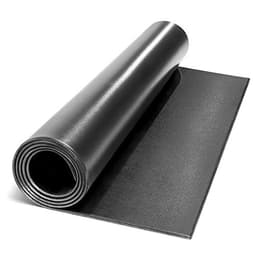
Marcy Fitness Equipment Mat (Mat-366)
Most floor covered
The largest mat here at 78 x 36 in, at the same quarter inch of thickness as the 30 x 60 — which is a real treadmill mat being used under a walking pad, with the surplus that implies.
Price as of October 21, 2026. #ad How we’re funded
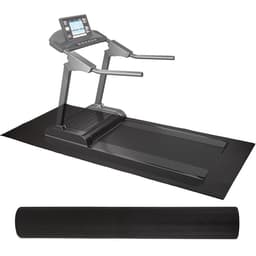
Fitvids High Density Equipment Mat (30 x 60)
Standing margin behind the belt
A 30 x 60 in mat at a stated quarter inch thick — the size that covers a full-size pad and still leaves you somewhere to step off, with both numbers in the listing title and nothing else published at all.
Price as of October 21, 2026. #ad How we’re funded
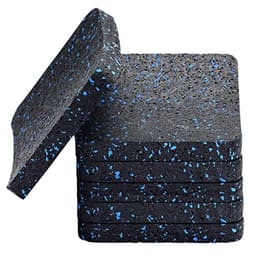
BESTXD Rubber Treadmill Mat Pads (4-pack)
Thickest rubber, least floor covered
Not a mat at all — four 3.94 in rubber pucks that go under the feet. Half an inch thick, which is twice any full mat here, and it costs a fraction of one.
Price as of October 21, 2026. #ad How we’re funded
| Model | Mat size (L x W) | Thickness | Material |
|---|---|---|---|
| Stepwaver Walking Pad Treadmill Mat | 55.2" x 23.6"retail listing | 0.16 inretail listing | Not publishednot published |
| Fitvids High Density Equipment Mat (30 x 60) | 60" x 30"retail listing | 0.25 inretail listing | Not publishednot published |
| Marcy Fitness Equipment Mat (Mat-366) | 78" x 36"retail listing | 0.25 inretail listing | Not publishednot published |
| BESTXD Rubber Treadmill Mat Pads (4-pack) | 3.94" x 3.94"retail listing | 0.5 inretail listing | Not publishednot published |
What we have not done
We have not put a walking pad on a wood floor, a laminate floor or a carpet, measured a dent, or tested a mat. We are not flooring specialists and we have no test data on any floor type. We have deliberately not completed the pressure calculation above, because the foot contact area it needs is not published by any maker in this category and a fabricated denominator would make the whole sum look authoritative while being worthless. Every figure is the maker’s or its listing’s, read on the date given. The full method.
Questions people actually ask
Will a walking pad damage a hardwood floor?
We cannot tell you, and nobody honestly can from the published record. Here is the arithmetic and where it stops. The load on your floor is the machine plus the person on it - with the heaviest pad we track at 69.5 lb and a 180 lb walker, about 250 lb. What decides whether that marks a floor is the PRESSURE, which is the load divided by the contact area of the machine's feet. Not one of the eight pads we track publishes a foot size, a foot material or a word about floor type. So the number that would answer the question does not exist, and we are not going to invent it.
Do walking pad makers say anything about floor type?
No. Not one of the eight pads on this site carries any statement about hardwood, laminate, vinyl, tile or carpet in its published specification - we looked across every maker page and listing we cite. That is the same shape of finding as the cushioning question and the noise question in this category: the thing buyers most want to know is the thing nobody will put in writing.
Is the damage risk a dent or a scratch?
They are two different problems with two different fixes, and conflating them is why most advice on this is useless. A dent is a static problem: a hard foot pressing into a soft floor over weeks, which is about pressure and time. A scratch is a dynamic problem: grit between the foot and the finish, moved by the machine shifting slightly as you walk. A mat addresses both, but by different mechanisms - it spreads and softens the contact, and it keeps grit off the finish.
Does a walking pad need a mat on hardwood?
We would use one, and the reason is not a claim about your floor - it is that a mat is the cheapest way to remove several unknowns at once. It puts a known material between a foot whose size and hardness nobody publishes and a finish you cannot replace cheaply, it keeps grit out of the contact, and on a thick mat it decouples some of the footfall from the structure. What it does not do is make the machine quiet for the flat below - that is a different problem.
How thick does the mat need to be?
There is no published answer, because no mat we track publishes a load rating. What is published is thickness, and the spread is wide: 0.16 in for the Stepwaver, 0.25 in for both the Fitvids and the Marcy, and 0.5 in for the BESTXD rubber pads. Thickness is what actually decouples a machine from a floor, so the thickest option is the one with the best mechanical argument - and it is also the one that covers the least floor, which is the trade.
Will it damage carpet instead?
Different mechanism again: on carpet the risk is crushing the pile and trapping heat under the machine rather than marking a hard surface, and the pad's own behaviour changes because the feet sink. We rank pads for carpet separately on exactly that basis, and the thing to know first is that no maker publishes a carpet statement either.
What about a floating floor or laminate?
The same unanswerable question, with one addition worth naming: a floating floor is not fastened down, so it can move slightly as a unit under a shifting load, which is a different thing from a dent in the surface. We have no test data on any floor type and we are not flooring specialists. If the floor is new, under warranty, or not yours, the manufacturer of the FLOOR is the party who has published something about point loads - not the manufacturer of the pad.
Read next
- Best walking pad mats — the ranking, sized mat against pad with the step-off margin behind the belt.
- Best walking pads for carpet — the soft-floor version, where footprint, unit weight and deck height decide it.
- Walking pad mat slipping — mat-sliding, machine-sliding and belt-slipping, and which one you actually have.
- Are walking pads noisy? — why a mat is the wrong tool for the neighbour problem.
- A lease-friendly walking pad setup — no drilling, nothing permanent, and the floor you have to hand back.
- Using a walking pad in an apartment — the floor below, the hours, and what actually travels through a building.
Sources
- Marcy Fitness Equipment Mat (Mat-366) - Amazon retail listing: published mat size and thickness; no material and no load rating published (read 2026-08-12)
- Fitvids High Density Equipment Mat (30 x 60) - Amazon retail listing: published mat size and thickness; no material and no load rating published (read 2026-09-11)
- BESTXD Rubber Treadmill Mat Pads (4-pack) - Amazon retail listing: published mat size and thickness; no material and no load rating published (read 2026-08-12)
- KingSmith / WalkingPad - Z1 product spec table, checked for a floor-type statement: published dimensions, belt size, 51 lb unit weight, 242 lb capacity and speed, and no statement about floor type, foot size, foot material or number of feet (read 2026-07-24)
- Sunny Health & Fitness - TreadPad Sleek Stride product spec table: 69.5 lb unit weight, the heaviest pad we track and the upper bound of the static-load arithmetic on this page; no statement about floor type (read 2026-07-24)