Are walking pads good or bad for your knees?
This is a medical question wearing a specification question's clothes. We can only answer the specification half, so here is that half - clearly labeled.
By Stephen V. · Last updated
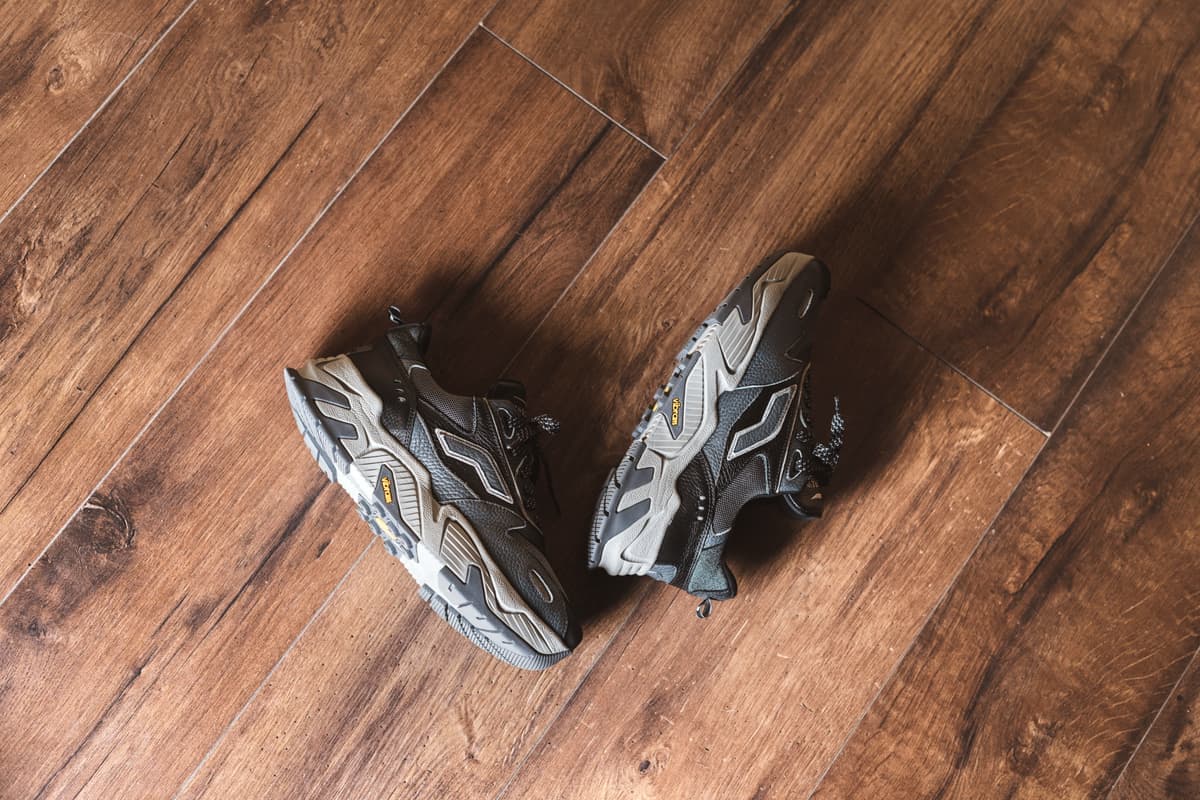
We are not clinicians and this is not medical advice. What is checkable: every maker here claims cushioning and none publishes a number for it— KingSmith lists “EVA & PET” as its shock absorption spec. If impact is your concern, a seated machine has none at all, which is structural rather than a claim.
What this page can and cannot tell you
Pad & Pace reads specification sheets. We have no clinicians, no force plates and no gait lab, and the honest boundary of what we can say is narrow enough to state up front:
- We can tell you what each maker publishes about deck construction and cushioning, and we can point out that it is unmeasurable.
- We can quote published research about walking as an activity, with the source and its own stated confidence.
- We cannot tell you whether a walking pad will help or hurt your knee. That depends on your knee, your history and your gait. It is a question for a physiotherapist or a doctor, and a website that answers it for you is overreaching.
If you have persistent knee pain, please get it looked at before you buy exercise equipment to treat it.
What the makers publish about cushioning
Cushioning is the specification every listing in this category gestures at and none of them measures. Here is what we actually found on the manufacturer pages, read on 2026-08-18.
KingSmith (WalkingPad Z1) publishes a line reading “Shock Absorption: EVA & PET”— two material names, no thickness, no deflection, no firmness rating. The marketing copy above it says “impact-reducing cushioning helps protect knees and ankles, making longer walks more comfortable”, under a trademarked cushioning name.
That pairing is worth naming precisely: a joint-health claim in the copy, and a materials list in the specification. There is no number anywhere that would let you compare that deck to another one, or to your floor.
We looked for a cushioning figure across the pads we track and found none of the things that would make a comparison possible: no deck deflection in millimeters, no durometer rating, no drop-test result, no measured peak force. In a category where the makers will publish a folded height to a tenth of an inch, the absence of any cushioning number at all is a choice. What each brand does and does not publish.
What published research says about walking and knees
We can step outside the spec sheets for one paragraph, carefully, and with the source named.
Harvard Health, publishing on 21 November 2025, reports a BMJ analysis of 217 randomized controlled trials run between 1990 and 2024, covering 15,684 participants and comparing six exercise types. Its summary: aerobic exercise — walking, cycling and swimming — “came out on top for relieving pain and improving general function, gait… and quality of life” for people with knee osteoarthritis. The article also notes that the strength of evidence was of moderate certainty and calls for longer follow-up.
Read that for what it is. It is about walking as an activity, in people with a specific diagnosed condition, under trial conditions. It is not a statement about any machine on this site, it is not permission to self-treat, and the researchers themselves flagged the certainty level. What it does support is the general position that low-impact aerobic movement is not something to be afraid of.
The levers you actually control
Given that no cushioning figure exists to shop on, the things that plausibly matter are things you set rather than things you buy:
Pace. Impact force per step rises with speed. Desk-pace walking at 1 to 2 mph is the gentlest use these machines get, and it is also the use most people bought them for. Finding the pace you can work at.
Duration, built up slowly.The most common complaint in the first fortnight is not knees at all — it is feet, calves and hips responding to hours of standing. Two twenty-minute blocks is a reasonable first week. How long, and how to build up.
Footwear. Shoes change what reaches your joints far more than any deck material we can find published. Walking barefoot or in socks on a moving belt is a different proposition in both grip and support. What we can and cannot say about shoes, socks and bare feet.
What is under the machine.A mat sits between the deck and a hard floor. Whether that changes anything you can feel is not something we can measure — and it does reliably do two other things: protect the floor and reduce what transmits into it. What a mat can and cannot do.
If impact is the problem, remove the impact
There is one structural answer available in this category, and it does not depend on any cushioning claim: a seated machine has no footfall at all.
On an under-desk elliptical or pedal exerciser your feet stay in contact with the pedals through the entire stroke. Nothing lands, so there is no impact event to cushion. That is a mechanical fact about the movement rather than a marketing claim about a material, which is exactly why we are willing to state it.
The elliptical shape adds a second, smaller point: an oval stroke keeps the knee lower through its travel than a full pedal circle does, for the same leg movement. No maker publishes a stride length, so that advantage is real and unquantified — we can describe the geometry and not measure it.
| Model | In use (L x W x H) | Unit weight | Max user | Resistance levels | Published noise |
|---|---|---|---|---|---|
| DeskCycle Under Desk Bike Pedal Exerciser | 20" L x 24" W x 10" Hmanufacturer spec | Not publishednot published | Not publishednot published | 8manufacturer spec | Not publishednot published |
| Cubii JR1 | 23.2" L x 17.56" W x 10" Hretail listing | Not publishednot published | 150 lbretail listing | 8retail listing | Not publishednot published |
| YOSUDA Under Desk Bike | Not publishednot published | Not publishednot published | Not publishednot published | 16retail listing | Not publishednot published |
| Sunny Health & Fitness Under Desk Smart Mini Pedal Exerciser (SF-B023005) | Not publishednot published | Not publishednot published | Not publishednot published | Not publishednot published | Not publishednot published |
| Stamina InMotion E1000 | 24.5" L x 17" W x 11.38" Hmanufacturer spec | 24 lbmanufacturer spec | 250 lbmanufacturer spec | Not publishednot published | Not publishednot published |
| Cubii Move | 21.5" L x 19.5" W x 9.5" Hretail listing | 17.5 lbretail listing | Not publishednot published | 6retail listing | Not publishednot published |
The under-desk ellipticals, ranked and the pedal exercisers. Both are far less exercise than walking, and for someone who cannot tolerate impact that trade is often the right one.
What we have not done
We have not tested a deck, measured a force or examined a knee. Everything above is either a quotation from a manufacturer page with its read date, a quotation from a named publication with its date, or a description of mechanics that follows from how the machines move.
We have not ranked these machines on joint impact, and we will not until someone publishes a figure that makes it possible. Ranking on unquantified cushioning claims would be inventing a comparison. Our full method. This page is general information about published specifications and published research; it is not medical advice.
Questions people actually ask
Are walking pads bad for your knees?
Nothing in the published specifications suggests they are inherently worse than walking on a hard indoor floor, and walking itself is generally regarded as a low-impact activity. What we can say with certainty is narrower: the makers publish no measurement of their cushioning, so nobody — including us — can compare one deck to another on impact. If you have a knee problem, that is a question for a clinician who can look at your knee, not for a specification table.
Is a walking pad good for knee pain?
That is a medical question and we are not qualified to answer it for you. What is published: Harvard Health, reporting a BMJ analysis of 217 randomized trials covering 15,684 participants, states that lower-impact aerobic exercise — walking, cycling and swimming — came out on top for relieving pain and improving function in knee osteoarthritis, while noting the strength of evidence was of moderate certainty. That is about walking as an activity, not about any machine on this site.
Do walking pads have cushioning?
Most claim some, and none quantifies it. KingSmith's Z1 page lists 'Shock Absorption: EVA & PET' — a materials list rather than a measurement — under marketing that says 'impact-reducing cushioning helps protect knees and ankles'. No maker on this site publishes a deck deflection figure, a durometer rating, or any number you could use to compare two machines. So 'cushioned' in this category means 'there is something between the belt and the floor'.
Is a walking pad easier on the knees than a treadmill?
Unknown, and anyone who tells you otherwise is guessing. A running treadmill built for impact usually has a deeper deck and a suspension system, and often publishes more about it. A walking pad sits much lower and is used at much lower speeds, and slower walking means lower impact forces per step. Those two effects push in opposite directions and neither is quantified in this category, so we will not rank them.
What is gentler than a walking pad if my knees hurt?
A seated machine removes the impact entirely, because nothing lands. Under-desk ellipticals and pedal exercisers keep your feet in contact with the pedals through the whole stroke — there is no footfall at all, which is a structural difference rather than a cushioning claim. The elliptical stroke also keeps the knee lower through its travel than a full pedal circle does, though no maker publishes a stride length to quantify that.
Does walking speed affect knee load?
Impact forces rise with pace — you land harder as you walk faster, which is also why walking faster is what your downstairs neighbor hears. That is a general property of gait rather than something specific to these machines, and it is one of the few levers you control without buying anything. It is also the reason desk-pace walking is the gentlest use these machines get.
Read next
- Best walking pads for seniors — step-up height, minimum speed and whether there is anything to hold.
- Best under-desk ellipticals — the machines with no footfall at all, ranked on what they publish.
- How to use a walking pad without falling — the two failure modes of a deck with no handrail.
- What speed should you set a walking pad to? — the lever that changes impact force, and it is free.
- Best walking pad mats — what goes between the deck and a hard floor, and what it actually does.
Sources
- WalkingPad Z1 — 'Shock Absorption: EVA & PET' and cushioning copy (read 2026-08-18)
- Harvard Health — Walking, cycling and swimming are best exercises for knee osteoarthritis, 21 November 2025 (read 2026-08-18)
- DeskCycle Under Desk Bike Pedal Exerciser — VIVO (DeskCycle) product spec table (read 2026-07-24)
- Cubii JR1 — Amazon retail listing spec table (read 2026-07-24)
- YOSUDA Under Desk Bike — Amazon retail listing (read 2026-07-24)
- Sunny Health & Fitness Under Desk Smart Mini Pedal Exerciser (SF-B023005) — Amazon retail listing (read 2026-07-24)
- Stamina InMotion E1000 — staminaproducts.com product page (read 2026-08-11)
- Cubii Move — Rehabmart retail listing spec table (read 2026-08-11)