Walking pad not working: repair, warranty or replace?
There is a published framework for this decision. It assumes a parts channel and a service network, and for a walking pad neither exists - which simplifies the answer considerably.
By Stephen V. · Last updated
Three questions, in order. Is it maintenance?A dry deck and a mistracking belt account for a lot of “not working”. Is it in warranty?One year on most machines here — inside it, this is the maker’s problem, not yours. Is there a part? Usually not: no maker on this site publishes a parts list, a belt part number or a service network. Out of warranty with no part published, replacement is the realistic answer.
How this page is funded: the buy links here are Amazon affiliate links, and we earn a commission if you buy through one — at no extra cost to you. It does not change what we rank first, because the commission rate is the same across every machine on this page. Full disclosure.
The published framework, quoted
There is a real decision framework for this, and it is worth starting from it rather than from intuition. KingSmith publishes one, and it is specific in a way most advice is not. Read on October 6, 2026:
“Repair an old treadmill when the frame is sound, the problem is limited to one available part, and the total quote is below about 40% of a comparable replacement. Replace it when repairs exceed roughly 60%, several major systems are failing, or the machine has structural, e[lectrical] … issues.”
It adds an age test alongside the cost test: a unit under seven years old is usually repairable while its main systems remain healthy, and after ten years multiple worn components make replacement the better call.
And it gives a list of faults that are generally worth repairing on an otherwise healthy machine: belt alignment, lubrication, a drive belt, a walking belt, loose hardware, a roller, an incline motor, or one control component.
That is a good framework. It is also written about a full-size treadmill, and three of the four things it needs from you do not exist for the machines on this site.
Three of its four inputs do not exist here
Work through the framework with a walking pad in front of you and it comes apart in a specific, informative way.
“One available part.”This is the load-bearing phrase and it is the one that fails first. We have checked the makers we track for a published parts catalog, a belt part number, a roller or deck part, or an authorized-repairer list, and found none — a finding this site has carried since the lifespan guide was written, where “a belt replacement interval, or a belt part number” sits on the list of things nobody in this category publishes. A framework that turns on whether the part is available cannot be applied when no part is published.
“40% of a comparable replacement.”A percentage test needs a quote, and a quote needs somebody who services these machines. That is exactly the gap the search data shows: “walking pad repair near me” and “walking pad repair shop” are both live, common searches, and a local treadmill technician stocks parts for full-size machines. A walking pad is a sealed low housing with a hinged deck, and it is not the same product.
Seven and ten years. Those thresholds assume a machine with a service life long enough for them to mean something. Nobody in this category publishes a service life at all, and the published commitments are measured in months: one year across the WalkingPad range with a paid extension available, and one year plus a stated 180-day extension for the UREVO Strol 2E. An age threshold of seven years is not a useful tool against a twelve-month warranty. Every published warranty term, and the figures nobody publishes.
What does survive:the fourth input, which is “several major systems failing, or structural and electrical issues”. That test needs no parts channel and no quote. It is a judgment about the machine in front of you, and it is the part of the framework that transfers cleanly.
So for a walking pad the decision collapses from four variables to three questions, in a fixed order, and the rest of this page is those three.
First: is it actually maintenance?
KingSmith’s own first instruction is to separate maintenance from a fault needing a technician, and it adds a warning worth taking literally: do not order a motor or control board until the fault is confirmed. A slipping belt, a shutdown, an error code or a loud noise can each have several causes.
Four checks cover a large share of “not working”:
- Did it stop after a long session?Then it may have done what it was designed to do. KingSmith publishes a one-hour limit for a walking machine with about half an hour off afterwards, and states the automatic stop after long use is “helpful in extending the lifetime of the machine, not a malfunction problem”. The quote in full.
- Is the deck dry?Unplug it, lift the belt, feel the deck. Rising friction is the mechanism behind a sluggish belt, a hesitation as the foot lands, a machine running warmer and a machine running louder — and the fix is one to two drops of silicone. Which oil, how much, how often.
- Is it the power path or the remote?“Not responding” and “not working” are frequently a flat remote battery or a shared circuit rather than the machine. On most models the remote is the only control there is. What still works without the remote and telling a load fault from a power fault from a circuit fault.
- Is there a code?KingSmith publishes a code list and a published reset procedure — power off for about ten minutes, then restart. Ten minutes, not ten seconds. E01 to E11, explained.
On the belt specifically, KingSmith’s repair guidance makes a point we would not have thought to publish and that is genuinely useful: a belt that drifts or slips may need cleaning, lubrication, tension adjustment or replacement — but repeated slipping can indicate a worn belt or a worn deck, and the instruction is to have the friction source corrected rather than to keep tightening the belt. Continually re-tensioning a belt to chase a friction problem is the mistake. The adjustment order, done properly.
On noise, its guidance splits the same way ours does: squeaks and vibration come from a dry deck, loose fasteners, an uneven floor or worn rollers, while grinding, knocking or metal-on-metal noise needs professional diagnosis because continued use can make it worse. KingSmith’s own FAQ is blunter still — a sharp metal whistle from the motor brush, an abnormal drum sound, or the motor cover contacting the belt are all contact-support cases rather than things to adjust. Which noise means what.
Second: is it in warranty?
If it is, stop reading comparison pages and open a support ticket. Inside the warranty period the economics of this page do not apply at all — the parts problem, the quote problem and the technician problem are the manufacturer’s to solve, not yours.
The published terms, from the figures this site already sources: KingSmith publishes one year across the WalkingPad range with a paid extension available, and UREVO publishes one year plus a stated 180-day extension for the Strol 2E. Those are short, which is an argument for treating the first twelve months as the window in which a problem is worth escalating hard rather than living with.
KingSmith’s repair guidance also tells you what to have ready before you ask for anything, and it is practical: find the model and serial number first, check whether the machine or the failed componentis still under warranty, and gather previous invoices. It adds a sharp observation about repair history — a machine that has already needed a control board, a motor and a belt in a short period is a weaker repair candidate than a machine with one fault, regardless of what the next quote says.
Two practical notes we would add, from what the makers do and do not publish. The paid extension is worth pricing at purchase rather than afterwards, because it is the only after-sale commitment in this category that is actually written down. And the component question matters: a replacement part supplied under warranty may carry its own shorter term, and KingSmith’s own advice is to confirm the replacement part has a useful warranty before approving work.
The faults that end the discussion
These are not cost decisions and they do not belong in a percentage test. KingSmith names them directly as replacement indicators: cracks, instability, damaged wiring, a burning smell, or unreliable stopping.
Each of those reads differently on a walking pad than on a gym treadmill, and in each case worse:
Unreliable stopping is the one we would put first. Seven of the eight pads we track publish no handrail of any kind, and on most of them the only control is a small wireless remote. A machine that does not stop when told, with nothing to grab and no physical stop button, is not a machine to keep diagnosing. Why the outlet is the real off switch.
A burning or hot-electrical smell means stop, unplug and contact the maker. Nothing on this site is a reason to keep running it, and we are not going to publish a troubleshooting procedure for a suspected electrical fault on a 110 V motor.
Cracks and instability matter more on a folding deck, because the hinge sits mid-span under the weight of a person walking. A frame or hinge you are unsure about is a structural issue in the sense the framework means.
Damaged wiringon a machine that gets folded, slid under furniture and carried between rooms is a foreseeable failure rather than an unlucky one — and it is the category of fault least likely to have a published part.
If you do get a quote, what it must include
Suppose you find someone who will work on it. KingSmith publishes a checklist for the quote itself, and it is the most useful paragraph in the article because it names the line items people forget:
The quote should include the service call, the diagnosis, parts, labor, travel, taxes, and any warranty on the repair. And the question to ask alongside it: whether another worn component is likely to damage the new part.
That last question is the one that decides value, and the article makes the point with an example worth repeating: a low quote for a control board is not good value if a dry, worn belt and deck are going to overload it again. Fixing the symptom while leaving the friction source in place buys you a second failure.
Hold that total against the 40 and 60 percent markers and against today’s live price for a comparable machine — which is the one number on this page we are not going to type into a sentence, because prices move and a stale figure would quietly wreck the arithmetic. The buy buttons further down carry the live price with the date it was read, and that is the number to compare against.
Replacing it: what to check this time
If the answer is replacement, the useful move is not to buy the same specification again. It is to buy from a maker that publishes the things this page has spent its whole length looking for.
That is a different ranking from every other page on this site. Here the criterion is what the maker publishes to help you after the purchase: a documented error-code list, a published continuous-use limit so you know what is normal, a noise triage that tells you which sounds are a support call, and a warranty term stated in writing. Those four are the entire after-sale support you are buying, and the field is not evenly matched.
KingSmith is the only brand of the eight pads we track that publishes all four. An error-code list with a reset interval, a one-hour duty cycle with a cool-down, a noise-by-type triage, and a one-year warranty with a paid extension. UREVO publishes the warranty term and the extension but none of the troubleshooting documentation we could find. Sunny, Lifepro and DeerRun publish none of the four.
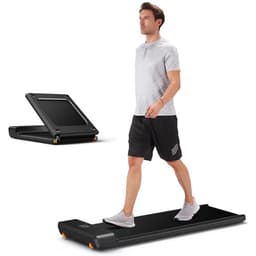
WalkingPad A1 Pro
A published noise figure
One of only two pads on this site whose maker publishes a decibel figure at all, and the only KingSmith model that does.
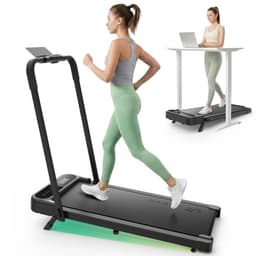
UREVO Strol 2E
Lightest with a handle
The lightest machine here that still has a safety handle, and the only one that goes fast enough to jog on.

WalkingPad Z1
Smallest storage footprint
The only pad here that folds in half AND stays under 5.5 inches folded, which is the combination a small apartment actually needs.
WalkingPad A1 Pro— first on this page’s criterion because it sits inside the best-documented brand here and it is also the only KingSmith model that publishes a decibel figure, under 65 dB. The cons we state everywhere still apply: no incline, no handrail, and at 63 lb it is one of the heavier pads here.
UREVO Strol 2E— the longest published warranty commitment in the category at one year plus a stated 180 days, and the only pad on this site with a safety handle, which matters directly to the unreliable-stopping risk above. Against it: UREVO publishes no decibel figure, no error-code list we could find, and the 40.2 inch belt is the shortest of the full-size pads.
WalkingPad Z1— the same documentation, at the smallest folded length on this site: 31.8 inches, 5.4 inches thick. Worth naming for a reason this page cares about — a machine you can actually store is a machine that spends less time being knocked, folded badly and dragged, which is where the damaged-wiring fault comes from. No handrail, and KingSmith publishes no decibel figure for it.
Two other things to carry into the next purchase, both from pages on this site rather than from any maker: the brands ranked purely by what they publish, and the maintenance that keeps the next one out of this decision.
What we have not done
We have not repaired, serviced or dismantled any machine on this site, and nothing above is a repair instruction. The 40 and 60 percent markers, the seven and ten year thresholds, the replacement red flags, the quote checklist and the repairable-fault list are all KingSmith’s, from the article named below with the date we read it. The warranty terms are each maker’s own, read on the date recorded. The claim that no maker here publishes a parts list, a belt part number or a service network is a finding from checking, and it is the reason this page exists. The full method.
Questions people actually ask
Is it worth repairing a walking pad?
Usually only inside the warranty, and the reason is structural rather than a judgment about build quality. KingSmith's own repair-or-replace guidance says to repair when the frame is sound, the fault is limited to ONE available part, and the quote is below about 40 percent of a comparable replacement. For a walking pad, 'one available part' is the problem: no maker on this site publishes a parts list, a belt part number or a service network, so there is frequently nothing to order and nobody local who works on them.
Where can I get a walking pad repaired?
Start with the manufacturer, because for most of these machines it is the only channel that exists. We checked the makers we track for a published service network, an authorized repairer list or a parts catalog and found none. That is why 'walking pad repair near me' and 'walking pad repair shop' are such common searches with such poor results - a local treadmill technician stocks parts for full-size machines, and these are a different product.
Can you replace a walking pad belt?
Nobody we track publishes a belt part number or a replacement interval, which we have flagged on this site since the lifespan guide was written. KingSmith's general treadmill guidance does list a walking belt among the components that are often economical to replace on a healthy machine - but that assumes a part you can buy. Before you go looking, note its other point: repeated belt slipping often means a worn belt OR a worn deck, and it says to correct the friction source rather than keep tightening the belt.
How old is too old for a walking pad?
KingSmith's framework uses seven and ten years - under seven is usually repairable with healthy main systems, over ten with recurring failures points to replacement. Worth holding that against what this category actually publishes: nobody states a service life, and the warranties are one year on the WalkingPad range with a paid extension available, or one year plus a stated 180-day extension for the UREVO Strol 2E. A seven-year threshold is not much help when the published commitment is twelve months.
When should you stop using a walking pad instead of fixing it?
KingSmith names the red flags explicitly, and they are not about cost: cracks, instability, damaged wiring, a burning smell, or unreliable stopping. Any of those is a replace-or-contact-support situation rather than a troubleshooting one. We would add the obvious: a machine that does not stop reliably, on a deck with no handrail, is not a machine to keep testing.
My walking pad is not working at all. What first?
Separate maintenance from a fault before spending anything - that is KingSmith's own first instruction, and it warns specifically against ordering a motor or control board before the fault is confirmed. In practice: check the power path and the remote, read any error code against the published list, check whether it cut out after a long session (there is a published one-hour limit where the automatic stop is by design), and check whether the deck is simply dry. Those four cover a large share of 'not working'.
Should I just buy a new one?
Often, and we would rather say it plainly than pretend a parts channel exists. If the machine is out of warranty, the fault is not maintenance, and no part is published for it, then a replacement is the realistic outcome. What we would not do is buy the same specification again without checking the things that go wrong - whether the maker publishes an error-code list, a cool-down limit and a warranty term at all, because that documentation is the only after-sale support you are actually buying.
Read next
- Walking pad keeps stopping or tripping the breaker — the diagnosis step this page tells you to finish before spending anything.
- Walking pad error codes explained — the published list and the ten-minute reset interval.
- Walking pad lubricant: which oil, how much, how often — the maintenance check that resolves a lot of 'not working'.
- How long do walking pads last? — the warranty terms, and the parts figures nobody publishes.
- Walking pad belt slipping or off-center — why repeated re-tensioning is the mistake, not the fix.
- Walking pad making a clicking or grinding noise — which sounds are maintenance and which are a support call.
- Walking pad overheating or getting hot — the published one-hour limit, and why the auto-stop is not a fault.
- Walking pad brands, ranked by what they publish — the documentation table behind this page's replacement picks.
- Lost the walking pad remote? What still works — a common cause of 'not responding' that is not a fault at all.
- How to use a walking pad without falling — why unreliable stopping ends the discussion rather than starting one.
Sources
- KingSmith / WalkingPad — “Should You Repair or Replace an Old Treadmill?”: the 40 percent / 60 percent of replacement cost markers, the seven-year and ten-year age thresholds, the replacement red flags (cracks, instability, damaged wiring, burning smell, unreliable stopping), the quote checklist, the list of faults usually worth repairing, the warning not to order a motor or control board before the fault is confirmed, and the repeated-belt-slipping / friction-source point (read 2026-10-06)
- KingSmith / WalkingPad — brand FAQ: the one-hour continuous-use limit with a half-hour cool-down and the automatic stop described as by design, plus the noise triage (floor slam, motor brush whistle, abnormal drum sound, motor cover contacting the belt) (read 2026-10-06)
- WalkingPad A1 Pro — walkingpad.com product spec table, checked for a published parts list, belt part number and service network; none published (read 2026-07-24)
- UREVO Strol 2E — urevo.com product spec table, checked for a published parts list, belt part number and service network; none published (read 2026-07-24)
- WalkingPad Z1 — walkingpad.com product spec table, checked for a published parts list, belt part number and service network; none published (read 2026-07-24)
- UREVO Strol 2E — product page, published warranty stated as 1 year plus 180 days extended (read 2026-08-18)
- WalkingPad Z1 — product page, published warranty stated as 1 year with optional extension available (read 2026-08-18)